


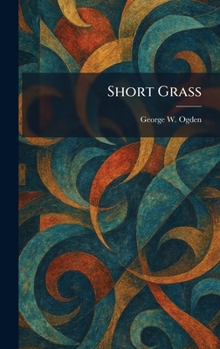
Short Grass

"Short Grass" is a gripping tale of the American frontier, masterfully capturing the spirit and hardships of life in the untamed West. Written by George W. Ogden, a celebrated voice in early twentieth-century Western fiction, the novel delves into the high-stakes world of land claims and cattle ranching during an era defined by expansion and lawlessness.
The story follows a cast of rugged characters navigating the challenges of the open range, where the line between justice and survival is often blurred. As tensions rise between established cattlemen and incoming settlers, the narrative explores themes of perseverance, honor, and the relentless drive to tame a harsh landscape. Ogden's vivid prose brings the dusty trails and sprawling vistas of the prairie to life, providing a window into the cultural and social dynamics of the pioneer era.
A classic of the genre, "Short Grass" remains a compelling read for those interested in historical adventures and the enduring legacy of the Western mythos. It stands as a testament to the grit required to build a life on the short-grass country of the Great Plains, offering a blend of action and atmospheric storytelling that continues to resonate with fans of traditional Western literature.
This work has been selected by scholars as being culturally important, and is part of the knowledge base of civilization as we know it. This work was reproduced from the original artifact, and remains as true to the original work as possible. Therefore, you may see the original copyright references, library stamps (as most of these works have been housed in our most important libraries around the world), and other notations in the work.
This work is in the public domain in the United States of America, and possibly other nations. Within the United States, you may freely copy and distribute this work, as no entity (individual or corporate) has a copyright on the body of the work.
As a reproduction of a historical artifact, this work may contain missing or blurred pages, poor pictures, errant marks, etc. Scholars believe, and we concur, that this work is important enough to be preserved, reproduced, and made generally available to the public. We appreciate your support of the preservation process, and thank you for being an important part of keeping this knowledge alive and relevant.
Customer Reviews
ThriftBooks ® and the ThriftBooks ® logo are registered trademarks of Thrift Books Global, LLC
