


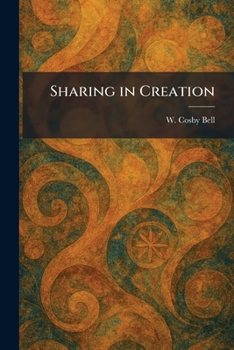
Sharing in Creation

"Sharing in Creation" explores the profound theological concept of creation as a continuous, dynamic process rather than a static historical event. Written by W. Cosby Bell, this work delves into the relationship between the divine and the human, suggesting that humanity is not merely a passive recipient of existence but an active participant in the ongoing unfolding of the universe.
Bell addresses the intellectual challenges of his era, bridging the gap between traditional Christian doctrine and the evolving scientific and philosophical perspectives of the early twentieth century. He examines how the creative power of God works through human agency, ethical development, and social progress. By emphasizing the cooperative nature of existence, the book offers a hopeful vision of human purpose and responsibility within a divinely ordered world.
This scholarly yet accessible treatise remains a significant contribution to the study of Christian philosophy and theodicy, providing readers with a deeper understanding of the spiritual dimensions of growth, change, and the pursuit of a higher moral order. It is an essential read for those interested in the intersection of faith, science, and the human role in the divine plan.
This work has been selected by scholars as being culturally important, and is part of the knowledge base of civilization as we know it. This work was reproduced from the original artifact, and remains as true to the original work as possible. Therefore, you may see the original copyright references, library stamps (as most of these works have been housed in our most important libraries around the world), and other notations in the work.
This work is in the public domain in the United States of America, and possibly other nations. Within the United States, you may freely copy and distribute this work, as no entity (individual or corporate) has a copyright on the body of the work.
As a reproduction of a historical artifact, this work may contain missing or blurred pages, poor pictures, errant marks, etc. Scholars believe, and we concur, that this work is important enough to be preserved, reproduced, and made generally available to the public. We appreciate your support of the preservation process, and thank you for being an important part of keeping this knowledge alive and relevant.
Customer Reviews
ThriftBooks ® and the ThriftBooks ® logo are registered trademarks of Thrift Books Global, LLC
