


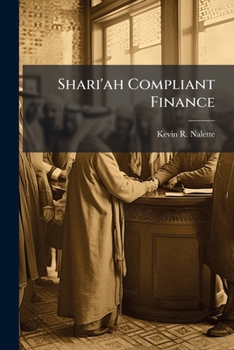
Shari'ah Compliant Finance: Toward Economic Jihad

This monograph discusses the relevant components of the Islamic financial sector, otherwise known as Shari'ah Compliant Finance, in order to gain a better understanding of an industry quickly spreading around the globe and the greater implications for the system's reliance on Shari'ah law. The analysis divided the Shari'ah financial system into its three main components: the underlying components of the financial system and associated definitions; the financial system's foundations on Shari'ah law; and finally the legal justification for the system as a method of economic jihad. This is important because United States financial institutions are involved in Shari'ah financing. Some of the largest financial organizations in the US offer Shari'ah compliant investment vehicles including Citigroup, American International Group (AIG), Goldman Sachs and Morgan Stanley. None of these corporations offer any information about Shari'ah law to investors other than a statement of conformance to ethical principles. Nowhere in the advertising literature do these companies discuss the other material facts of Shari'ah compliance as required by the 1933 and 1934 Securities Acts defining disclosure requirements. The triadic argument plainly demonstrates that Shari'ah Compliant Financing is economic jihad, a methodology effectively establishing a foothold of acceptance for Shari'ah law under the guise of an ethical banking structure. Once Shari'ah law gains acceptance in this seemingly benign realm, those supporting the "settlement" of the West may push for Shari'ah law acceptance in other facets of the legal system.
This work has been selected by scholars as being culturally important, and is part of the knowledge base of civilization as we know it. This work was reproduced from the original artifact, and remains as true to the original work as possible. Therefore, you will see the original copyright references, library stamps (as most of these works have been housed in our most important libraries around the world), and other notations in the work.
This work is in the public domain in the United States of America, and possibly other nations. Within the United States, you may freely copy and distribute this work, as no entity (individual or corporate) has a copyright on the body of the work.
As a reproduction of a historical artifact, this work may contain missing or blurred pages, poor pictures, errant marks, etc. Scholars believe, and we concur, that this work is important enough to be preserved, reproduced, and made generally available to the public. We appreciate your support of the preservation process, and thank you for being an important part of keeping this knowledge alive and relevant.
Customer Reviews
ThriftBooks® and the ThriftBooks® logo are registered trademarks of Thrift Books Global, LLC
