


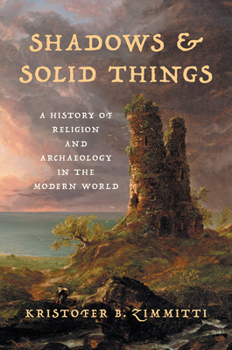
Shadows and Solid Things: A History of Religion and Archaeology in the Modern World
No Customer Reviews

Archaeology began in an era when many people read ancient religious texts literally, believing that what was described on the page corresponded to a material reality that existed beneath the soil. With a shovel in one hand and a sacred text in the other, early archaeologists sought confirmation through concrete evidence. In the process, they opened themselves to the disturbing possibility that they would find nothing--or, perhaps even more unsettling, discover evidence that would challenge their cherished beliefs.
Using accounts of excavations in Italy, Egypt, Iraq, and Palestine, Kristofer B. Zimmitti explores the tensions between science and religion, faith and reason. As archaeology grew more popular during the eighteenth and nineteenth centuries, excavations from Herculaneum to Babylon and discoveries such as the Moabite Stone transformed the modern understanding of the ancient past for Protestants, Catholics, Jews, Muslims, and Latter-day Saints. While some archaeological findings confirmed the truth of ancient texts, others threatened to overturn them. Rather than abandon or question their faith, many believers kept digging. When the dust of excavation had settled, today's religious world had been forged.
Using accounts of excavations in Italy, Egypt, Iraq, and Palestine, Kristofer B. Zimmitti explores the tensions between science and religion, faith and reason. As archaeology grew more popular during the eighteenth and nineteenth centuries, excavations from Herculaneum to Babylon and discoveries such as the Moabite Stone transformed the modern understanding of the ancient past for Protestants, Catholics, Jews, Muslims, and Latter-day Saints. While some archaeological findings confirmed the truth of ancient texts, others threatened to overturn them. Rather than abandon or question their faith, many believers kept digging. When the dust of excavation had settled, today's religious world had been forged.
Format:Hardcover
Language:English
ISBN:B0GVKVKYX8
ISBN13:9781469698168
Release Date:November 2026
Publisher:University of North Carolina Press
Length:298 Pages
Customer Reviews
0 rating
Copyright © 2026 Thriftbooks.com
Terms of Use | Privacy Policy | Do Not Sell/Share My Personal Information | Cookie Notice | Cookie Preferences | Accessibility Statement
ThriftBooks ® and the ThriftBooks ® logo are registered trademarks of Thrift Books Global, LLC
ThriftBooks ® and the ThriftBooks ® logo are registered trademarks of Thrift Books Global, LLC
