


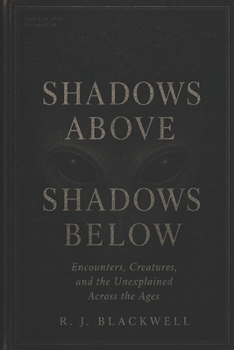
Shadows Above, Shadows Below: Encounters, Creatures, and the Unexplained Across the Ages

Shadows Above, Shadows Below Encounters, Creatures, and the Unexplained Across the Ages
Before the first cities rose, before written language existed, people were already recording what they saw in the sky.
They painted it on cave walls. They described it in the oldest religious texts. They reported it to military officials, police investigators, and scientific bodies across every century and every continent. The details changed. The core did not.
Shadows Above, Shadows Below is a documented account of more than forty cases drawn from official records, declassified files, military investigations, and firsthand testimony. It does not ask you to believe anything. It asks you to read carefully and decide for yourself.
The cases span six centuries and six continents. Soviet-era incidents that spent decades behind the Iron Curtain. Encounters over the forests and lakes of South America that never made the Western press. Military pilots who reported objects that outperformed anything in any known inventory. Children in a Russian city park who described something that landed, produced figures, and left physical traces in the ground. A logger in the Pacific Northwest. A naval aviator off the California coast. A group of prospectors in the Arizona desert. What they saw, what was recorded, and what remains unexplained.
R. J. Blackwell approaches each case the same way: with the original sources, the physical evidence where it exists, the witness testimony read in its proper context, and an honest account of what the record does and does not support. When the evidence points toward a conventional explanation, that is noted. When it does not, that is noted too.
This is not a book for readers who want confirmation. It is a book for readers who want the cases themselves, presented without sensationalism and without dismissal, and who are willing to sit with questions that do not yet have answers.
What distinguishes this book from most in its field is what it refuses to do. It refuses to oversell the evidence. It refuses to ignore it. It treats the Soviet farmer and the American general as equally serious witnesses, reads their accounts in the context of what they knew and what language was available to them, and lets the record speak.
Forty cases. Six sections. Centuries of documentation.
The questions remain open.
Customer Reviews
ThriftBooks ® and the ThriftBooks ® logo are registered trademarks of Thrift Books Global, LLC
