


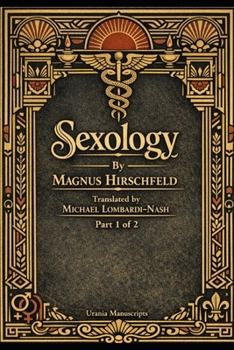
Sexology Part 1

In Sexology (1926), pioneering physician and human-rights advocate Magnus Hirschfeld offers one of the earliest comprehensive explorations of human sexuality-scientific, psychological, social, and deeply humane. Drawing on decades of clinical experience and research, Hirschfeld dismantles superstition and stigma to reveal sexuality as a natural, diverse, and essential dimension of human life.
Beginning with a clear definition of sexology's scope and the psychophysical nature of sexuality, Hirschfeld guides readers through the forces that shape sexual experience. He exposes the long history of sexual persecution and the ascetic ideologies that have distorted public understanding. He examines the real consequences of enforced abstinence, illuminating the widespread "sexual distress" produced by moralistic repression.
Hirschfeld contrasts sexual enlightenment with the myths and superstitions that have long governed intimate life, arguing for education grounded in science rather than fear. He identifies the harmful influences-cultural, religious, and educational-that estrange individuals from their own bodies, and advocates for an upbringing rooted in naturalness and acceptance.
In a groundbreaking discussion of childhood and sexuality, Hirschfeld engages with emerging psychoanalytic theories, including those of Freud, while offering his own measured insights. He concludes with a nuanced exploration of self-gratification, reframing it not as vice but as a response to "sexual loneliness" and a normal part of human development.
Clear, compassionate, and far ahead of its time, Sexology remains a foundational text in the history of sexual science. Hirschfeld's call for understanding, dignity, and truth continues to resonate a century later.
Customer Reviews
ThriftBooks ® and the ThriftBooks ® logo are registered trademarks of Thrift Books Global, LLC
