


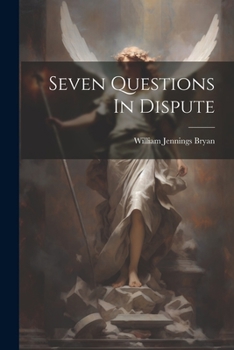
Seven Questions In Dispute

Select Format
Select Condition 
Book Overview
In this compelling work of apologetics, American politician and orator William Jennings Bryan defends the Christian faith against seven of the most common objections raised by its critics. With clarity and wit, Bryan takes on such topics as the problem of evil, the reliability of the Bible, and the compatibility of science and religion, offering persuasive arguments that continue to resonate with readers today. This edition includes a new introduction situating Bryan's arguments in their historical context and exploring their continuing relevance.
This work has been selected by scholars as being culturally important, and is part of the knowledge base of civilization as we know it.
This work is in the "public domain in the United States of America, and possibly other nations. Within the United States, you may freely copy and distribute this work, as no entity (individual or corporate) has a copyright on the body of the work.
Scholars believe, and we concur, that this work is important enough to be preserved, reproduced, and made generally available to the public. We appreciate your support of the preservation process, and thank you for being an important part of keeping this knowledge alive and relevant.
Customer Reviews
ThriftBooks ® and the ThriftBooks ® logo are registered trademarks of Thrift Books Global, LLC
