


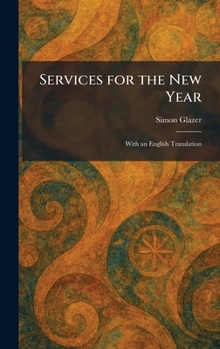
Services for the New Year: With an English Translation

"Services for the New Year With an English Translation" is a comprehensive collection of liturgical prayers and rituals for Rosh Hashanah, the Jewish New Year. Compiled and translated by Rabbi Simon Glazer, this work serves as a foundational guide for one of the most significant observances in the Jewish calendar. It includes the traditional prayers (Mahzor) essential for the holiday, presented with clear English translations to make the profound spiritual themes of judgment, renewal, and kingship accessible to a wider audience.
The text encompasses the various poetic and petitionary prayers that define the solemn yet hopeful atmosphere of the New Year services. By bridging the gap between the ancient Hebrew liturgy and the English-speaking practitioner, this volume preserves the devotional intensity of the holiday while providing a functional resource for synagogue or private worship. Simon Glazer's translation reflects the efforts of his era to maintain religious traditions within a changing cultural landscape. This work remains a vital resource for understanding Jewish liturgy, offering a window into the spiritual life and communal devotions associated with the High Holy Days.
This work has been selected by scholars as being culturally important, and is part of the knowledge base of civilization as we know it. This work was reproduced from the original artifact, and remains as true to the original work as possible. Therefore, you may see the original copyright references, library stamps (as most of these works have been housed in our most important libraries around the world), and other notations in the work.
This work is in the public domain in the United States of America, and possibly other nations. Within the United States, you may freely copy and distribute this work, as no entity (individual or corporate) has a copyright on the body of the work.
As a reproduction of a historical artifact, this work may contain missing or blurred pages, poor pictures, errant marks, etc. Scholars believe, and we concur, that this work is important enough to be preserved, reproduced, and made generally available to the public. We appreciate your support of the preservation process, and thank you for being an important part of keeping this knowledge alive and relevant.
Customer Reviews
ThriftBooks ® and the ThriftBooks ® logo are registered trademarks of Thrift Books Global, LLC
