


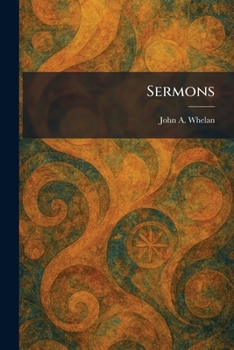
Sermons

"Sermons" is a compelling collection of homilies and spiritual discourses authored by Rev. John A. Whelan, O.S.A. Rooted in the rich tradition of the Order of Saint Augustine, this work offers a profound exploration of Catholic doctrine, moral theology, and the application of Christian principles to daily life. The collection provides insight into the liturgical year and the essential tenets of the faith, aiming to inspire devotion and clarity of purpose among the faithful.
Whelan's writing is characterized by its clarity and pastoral warmth, making complex theological concepts accessible to a broad audience. As a reflection of early 20th-century religious thought, these sermons serve as both a historical record of Catholic preaching and a timeless resource for spiritual reflection. The work touches upon themes of redemption, the sacraments, and the life of Christ, providing readers with practical guidance on living a life of virtue. This volume remains an important contribution to the corpus of Augustinian literature and a valuable tool for those seeking to deepen their understanding of Christian homiletics and the enduring truths of the Catholic Church.
This work has been selected by scholars as being culturally important, and is part of the knowledge base of civilization as we know it. This work was reproduced from the original artifact, and remains as true to the original work as possible. Therefore, you may see the original copyright references, library stamps (as most of these works have been housed in our most important libraries around the world), and other notations in the work.
This work is in the public domain in the United States of America, and possibly other nations. Within the United States, you may freely copy and distribute this work, as no entity (individual or corporate) has a copyright on the body of the work.
As a reproduction of a historical artifact, this work may contain missing or blurred pages, poor pictures, errant marks, etc. Scholars believe, and we concur, that this work is important enough to be preserved, reproduced, and made generally available to the public. We appreciate your support of the preservation process, and thank you for being an important part of keeping this knowledge alive and relevant.
Customer Reviews
ThriftBooks ® and the ThriftBooks ® logo are registered trademarks of Thrift Books Global, LLC
