





Select Format
Select Condition 
Book Overview
"Sense and Sensibility" is a masterful exploration of the contrasts between temperament and judgment in Regency-era England. The novel follows the lives of the Dashwood sisters, Elinor and Marianne, who find themselves suddenly reduced to poverty following the death of their father. As they move to a modest cottage in Devonshire, both sisters experience the complexities of love, heartbreak, and social expectation.
Elinor, representing sense, navigates her feelings for Edward Ferrars with caution and social propriety, while Marianne, embodying sensibility, throws herself passionately into a whirlwind romance with the charming but unreliable John Willoughby. Jane Austen's sharp wit and keen observations of the landed gentry provide a vivid backdrop for this timeless coming-of-age story. Through the sisters' trials, the work examines the balance between emotion and reason, the limitations placed upon women of the period, and the enduring strength of sisterly bonds. This classic of English literature remains a compelling study of character and societal norms that continues to resonate with readers today.
This work has been selected by scholars as being culturally important, and is part of the knowledge base of civilization as we know it. This work was reproduced from the original artifact, and remains as true to the original work as possible. Therefore, you may see the original copyright references, library stamps (as most of these works have been housed in our most important libraries around the world), and other notations in the work.
This work is in the public domain in the United States of America, and possibly other nations. Within the United States, you may freely copy and distribute this work, as no entity (individual or corporate) has a copyright on the body of the work.
As a reproduction of a historical artifact, this work may contain missing or blurred pages, poor pictures, errant marks, etc. Scholars believe, and we concur, that this work is important enough to be preserved, reproduced, and made generally available to the public. We appreciate your support of the preservation process, and thank you for being an important part of keeping this knowledge alive and relevant.
Customer Reviews
An interesting read
Early review
Wrong Cover
Wrong cover
This is a wonderful book about self-sacrifice.
Cool.
Good reading but not excellent
Makes Me Wish I Had Sisters!
a sign of the times......
Great Read
Sense and Sensibility
Sense and Sensibility Mentions in Our Blog
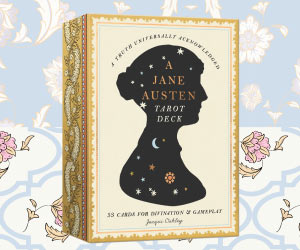
Although she was relatively unknown at the time of her death, Jane Austen is one of the world's best-loved authors. Her novels, all global bestsellers, have been published in dozens of languages and have been the subject of countless adaptations, retellings, and spinoffs. December 16 marks 250 years since the celebrated author's birth. Help us celebrate her!
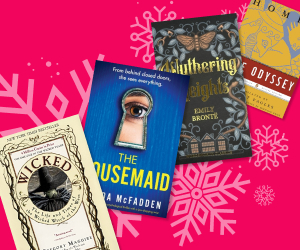
It's always fun to see how books get adapted for the screen. But sometimes, this happens before we've had the chance to read the source material. Or maybe we just want to reread a book before we watch. Here are 22 of the books behind the buzziest new and upcoming book-to-screen adaptations.

We can't go to any actual beer fests this year, but we can imagine the ideal scene. And, of course, it would be filled with some of our favorite beer-loving authors from history. While we're at it, let’s throw in a few of their iconic characters. Join us on fantasy dates with five authors who found inspiration while imbibing.

Did you know that the world’s first novel was written by a woman? Or that female authors had a hand in several literary genres, including sci-fi, dystopian, and rom-com? And guess who the world’s first billionaire writer was? Hint: Her most famous character’s initials are H.P. Read on to learn about history’s innovative literary ladies.
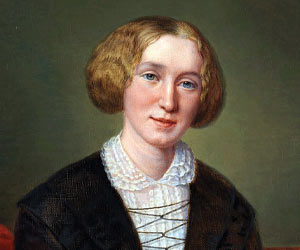
On this day in 1819, the prominent author Mary Ann Evans was born. But you may not have heard of her because her books were published using the pseudonym George Eliot. And she’s not alone. There’s a long history of famous women writers who adopted male pen names.
ThriftBooks® and the ThriftBooks® logo are registered trademarks of Thrift Books Global, LLC
