


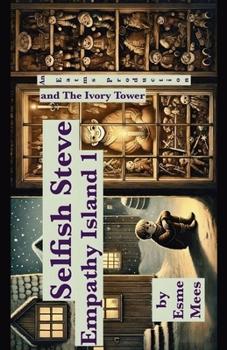
Selfish Steve and The Ivory Tower- Empathy Island 1

Selfish Steve is a short illustrated fable about greed, isolation, class blindness, and what happens when one boy's wealth sits on top of everyone else's suffering. Set in a village overshadowed by an ivory tower, the story follows Steve, a rich boy sealed inside luxury and self-regard, and Larry, a struggling village boy trying to survive in the fallout of inequality, hunger, and a system built to protect the comfortable. What begins like a simple moral tale quickly becomes something sharper: a story about wealth, power, indifference, and the slow awakening of collective care.
The book works as both fiction and social parable. Steve's favorite belief, that everyone makes their own choices, becomes a shield against empathy, responsibility, and any honest understanding of how hardship actually works. Down in the village, Larry and Jane move in the opposite direction, toward kindness, solidarity, mutual aid, and the rebuilding of a community under strain. The result is a story that feels clear enough for younger readers but pointed enough for adults who understand that fairy tales have always been one of the best ways to talk about real power.
What gives Selfish Steve even more character is its visual world. The book includes original interior prints by Esme Mees, and those illustrations matter. They deepen the fable atmosphere, give the story a handmade, storybook-meets-political-art feel, and help set the emotional terms of the book: hunger below, excess above, tenderness in the village, coldness in the tower. The imagery is not an add-on. It is part of what makes the book feel like an object with mood, intention, and bite.
This is a small book with a real point. It uses a clean narrative and memorable characters to ask bigger questions about empathy, wealth hoarding, moral responsibility, inequality, and the kind of society people build when they stop waiting for the tower to save them. It is readable, allegorical, and unusually well suited to anyone who likes fiction with a social conscience and illustrations that carry some of the story's weight.
Customer Reviews
ThriftBooks® and the ThriftBooks® logo are registered trademarks of Thrift Books Global, LLC
