


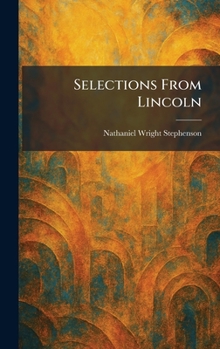
Selections From Lincoln

"Selections From Lincoln" is a carefully curated collection of the most significant writings, speeches, and correspondence of Abraham Lincoln, the sixteenth president of the United States. Compiled by historian Nathaniel Wright Stephenson, this volume provides a comprehensive look into the intellectual and moral development of a leader who guided the nation through its greatest internal crisis.
The work features essential documents that span Lincoln's political career, from his early public addresses to the profound oratory of his presidency. Included are landmark texts such as the Gettysburg Address and the Second Inaugural Address, which showcase Lincoln's mastery of the English language and his ability to articulate the fundamental values of democracy and the Union. Beyond his public speeches, the collection includes private letters and state papers that offer intimate glimpses into his decision-making process and his evolving perspectives on slavery and emancipation.
Focused on the literary and historical merit of Lincoln's own words, "Selections From Lincoln" serves as both a primary source for historical study and a testament to the power of political rhetoric. It is an indispensable resource for readers interested in the American Civil War, 19th-century statesmanship, and the enduring legacy of one of America's most iconic figures.
This work has been selected by scholars as being culturally important, and is part of the knowledge base of civilization as we know it. This work was reproduced from the original artifact, and remains as true to the original work as possible. Therefore, you may see the original copyright references, library stamps (as most of these works have been housed in our most important libraries around the world), and other notations in the work.
This work is in the public domain in the United States of America, and possibly other nations. Within the United States, you may freely copy and distribute this work, as no entity (individual or corporate) has a copyright on the body of the work.
As a reproduction of a historical artifact, this work may contain missing or blurred pages, poor pictures, errant marks, etc. Scholars believe, and we concur, that this work is important enough to be preserved, reproduced, and made generally available to the public. We appreciate your support of the preservation process, and thank you for being an important part of keeping this knowledge alive and relevant.
Customer Reviews
ThriftBooks ® and the ThriftBooks ® logo are registered trademarks of Thrift Books Global, LLC
