


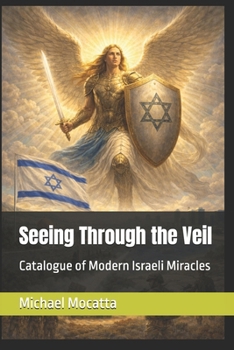
Seeing Through the Veil: Catalogue of Modern Israeli Miracles

WHEN A NATION'S SURVIVAL BECOMES DATA
For decades, Israel's modern story has been explained as contingency-war, diplomacy, alliances, innovation. Yet as the decades accumulate, a different question presses in: not only how Israel survived, but why that survival continues to resist tidy absorption into accepted frameworks.
THE VEIL: SEEING WITHOUT INTEGRATING
This book explores the "veil" that forms when evidence accumulates but interpretation stalls-when reality is acknowledged, yet not permitted to reshape expectation. It is not written as a polemic, but as a disciplined invitation to intellectual responsibility: to look again, weigh the improbability honestly, and ask what the accumulation might mean.
A CAREFUL CATALOGUE OF MODERN "MIRACLES"
Rather than relying on slogans or sentiment, the book presents a structured catalogue of high-impact events and patterns. Each entry is treated as historical data and-where appropriate-a prompt for philosophical and theological reflection. Entries include: a descriptive title, category, dates, a factual description, why it is considered "miraculous," mainstream explanations, a counter-argument based on pattern and probability, suggested primary sources, secondary commentary, optional biblical parallels, and a confidence level.
WHY THIS MATTERS FOR CHRISTIANS
For many readers, the modern return of Israel collides with inherited theological assumptions-especially traditions that spiritualised or denied Israel's national future. This book does not demand a single interpretive lens; it asks for honest engagement with the data and the discomfort it creates.
WHAT YOU'LL FIND INSIDE
A clear, method-driven framework for evaluating "miracle claims" without triumphalismHistorically grounded case studies and recurring national patternsMainstream explanations presented fairly-then tested against probability, durability, and scaleTheological reflections on covenant continuity, blindness, and reinterpretation under evidenceWHO THIS BOOK IS FOR
If you've felt the tension between headlines, history, and theology-if you've sensed that Israel's story is "seen" but not truly integrated-this book is for you. It is written for readers who want clarity, restraint, and an evidence-first approach to one of the most contested narratives of the modern world.
Customer Reviews
ThriftBooks ® and the ThriftBooks ® logo are registered trademarks of Thrift Books Global, LLC
