


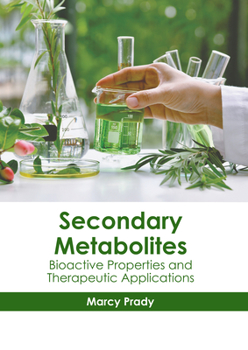
Secondary Metabolites: Bioactive Properties and Therapeutic Applications
No Customer Reviews

Secondary metabolites refer to a heterogeneous group of natural metabolic products, which are not directly involved in the normal growth and development, or reproduction of an organism. They can be produced by any life form such as bacteria, fungi, animals or plants. Secondary metabolites are responsible for mediating ecological interactions, which may benefit the organism by increasing its survivability or fertility. They are classified into five main classes according to their structure, function and biosynthesis. These include terpenoids and steroids, fatty acid-derived substances and polyketides, alkaloids, non-ribosomal polypeptides, and enzyme cofactors. There are several medical applications of secondary metabolites due to their immunosuppressant, antitumor, antiprotozoal, antihelminth, antiviral, and anti-aging properties. This book elucidates the concepts and innovative models around prospective developments with respect to secondary metabolites, their bioactive properties, and therapeutic applications. A number of latest researches have been included to keep the readers up-to-date with the latest concepts in this area of study.
Format:Hardcover
Language:English
ISBN:1646475364
ISBN13:9781646475360
Release Date:September 2023
Publisher:Hayle Medical
Length:240 Pages
Weight:1.87 lbs.
Dimensions:0.6" x 8.5" x 11.0"
Customer Reviews
0 rating
Copyright © 2026 Thriftbooks.com Terms of Use
| Privacy Policy | Do Not
Sell/Share My Personal Information | Cookie Policy | Cookie Preferences | Accessibility Statement
ThriftBooks® and the ThriftBooks® logo are registered trademarks of Thrift Books Global, LLC
ThriftBooks® and the ThriftBooks® logo are registered trademarks of Thrift Books Global, LLC
