


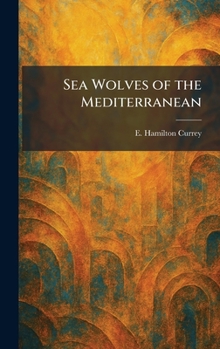
Sea Wolves of the Mediterranean

"Sea Wolves of the Mediterranean" is a gripping historical account of the fierce struggle for naval supremacy in the Mediterranean Sea during the height of the Barbary corsairs' power. E. Hamilton Currey meticulously details the rise of these legendary pirates who, for centuries, terrorized the coasts of Europe and dominated the vital trade routes of the Middle Sea. Centered on the grand conflict between the Cross and the Crescent, the narrative brings to life the daring exploits and brutal tactics of figures such as the Barbarossa brothers, Dragut, and Ulugh Ali.
The work explores the geopolitical landscape of the sixteenth century, tracing the development of the galley as a weapon of war and the evolution of naval strategy that defined an era. Currey provides a vivid depiction of the galley-slaves' hardships, the daring raids on coastal towns, and the massive sea battles that shaped the destiny of empires. "Sea Wolves of the Mediterranean" offers readers a profound look into the lives of those who ruled the waves through terror and skill, blending scholarly research with a compelling storytelling style that captures the adventurous and often violent spirit of the age. It remains an essential read for anyone interested in maritime history, the history of North Africa, and the long-standing naval rivalry between the Ottoman Empire and the European powers.
This work has been selected by scholars as being culturally important, and is part of the knowledge base of civilization as we know it. This work was reproduced from the original artifact, and remains as true to the original work as possible. Therefore, you may see the original copyright references, library stamps (as most of these works have been housed in our most important libraries around the world), and other notations in the work.
This work is in the public domain in the United States of America, and possibly other nations. Within the United States, you may freely copy and distribute this work, as no entity (individual or corporate) has a copyright on the body of the work.
As a reproduction of a historical artifact, this work may contain missing or blurred pages, poor pictures, errant marks, etc. Scholars believe, and we concur, that this work is important enough to be preserved, reproduced, and made generally available to the public. We appreciate your support of the preservation process, and thank you for being an important part of keeping this knowledge alive and relevant.
Related Subjects
HistoryCustomer Reviews
ThriftBooks ® and the ThriftBooks ® logo are registered trademarks of Thrift Books Global, LLC
