


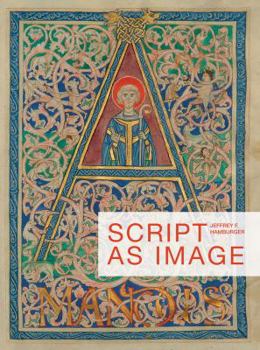
Script as Image
No Customer Reviews

In the Middle Ages, writing conveyed far more than information. Incontradistinction to the modern separation of image and text and, byimplication, form and content, which was reified with the invention ofprinting, illuminated manuscripts made images out of words. Inconsonance with Christian doctrine, which declared that the Word hadbecome flesh, letters painted on parchment assumed bodily presence tocreate effects of power and persuasion. Painted letters elicited modesof performance, oral recitation and ritual action. Far from calligraphicornament or a medium with prescribed boundaries, medieval letteringreveals itself as a flexible instrument in which various categories ofhuman experience and expression -- the audible, the visible, thesymbolic and the figurative -- come together. Among the topics touchedon by this book are display scripts, monograms, nomina sacra and carminafigurata, epigraphic inscriptions, chrysography and color, speechscrolls, relationships among author, scribe and artist as expressedthrough scripts, the anthropomorphic dimensions of abstract lettering, and the impact of iconic scripts on the reader.
Format:Hardcover
Language:English
ISBN:9042930357
ISBN13:9789042930353
Release Date:February 2014
Publisher:Peeters
Length:77 Pages
Weight:0.95 lbs.
Dimensions:0.3" x 8.7" x 11.9"
Customer Reviews
0 rating
Copyright © 2026 Thriftbooks.com
Terms of Use | Privacy Policy | Do Not Sell/Share My Personal Information | Cookie Notice | Cookie Preferences | Accessibility Statement
ThriftBooks ® and the ThriftBooks ® logo are registered trademarks of Thrift Books Global, LLC
ThriftBooks ® and the ThriftBooks ® logo are registered trademarks of Thrift Books Global, LLC
