


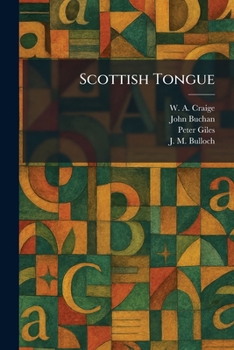
Scottish Tongue

Select Format
Select Condition 
Book Overview
"The Scottish Tongue" is an insightful collection of lectures focused on the preservation, history, and study of the Scots language. Featuring contributions from esteemed scholars and literary figures including W.A. Craigie, John Buchan, Peter Giles, and J.M. Bulloch, this work examines the linguistic nuances and cultural significance of the Scottish vernacular. Originally delivered as a series of presentations to the Vernacular Circle of the Burns Club of London, these essays delve into the historical development of Scots and the challenges it faced in the early twentieth century.
The authors explore a wide range of topics, from the philological roots of the language to its vital role in Scottish literature and national identity. By analyzing the unique expressive power of the "Scottish Tongue," the contributors celebrate the rich heritage of Scotland's native speech while advocating for its continued study and appreciation. This collection serves as a vital resource for linguists, historians, and readers interested in the intersection of language, literature, and heritage. It provides a scholarly yet accessible look at how the Scots language defines the character of its people and maintains its place in the broader landscape of Germanic languages.
This work has been selected by scholars as being culturally important, and is part of the knowledge base of civilization as we know it. This work was reproduced from the original artifact, and remains as true to the original work as possible. Therefore, you may see the original copyright references, library stamps (as most of these works have been housed in our most important libraries around the world), and other notations in the work.
This work is in the public domain in the United States of America, and possibly other nations. Within the United States, you may freely copy and distribute this work, as no entity (individual or corporate) has a copyright on the body of the work.
As a reproduction of a historical artifact, this work may contain missing or blurred pages, poor pictures, errant marks, etc. Scholars believe, and we concur, that this work is important enough to be preserved, reproduced, and made generally available to the public. We appreciate your support of the preservation process, and thank you for being an important part of keeping this knowledge alive and relevant.
Related Subjects
Language ArtsCustomer Reviews
ThriftBooks ® and the ThriftBooks ® logo are registered trademarks of Thrift Books Global, LLC
