


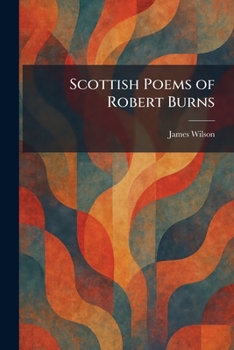
Scottish Poems of Robert Burns

Select Format
Select Condition 
Book Overview
"Scottish Poems of Robert Burns" is a curated collection of works by Scotland's legendary national poet. This volume highlights the lyrical mastery and profound humanity that defined the career of Robert Burns, often referred to as the Bard of Ayrshire. The poems featured in this collection explore a wide range of themes, including the beauty of the natural world, the trials of rural life, the complexities of love, and the enduring spirit of Scottish patriotism.
Compiled with academic rigor by Sir James Wilson, this presentation focuses on the authentic Scots dialect, offering insights into the phonetic qualities and rhythmic nuances of the original verse. By bridging the gap between historical linguistics and literary art, the work allows readers to experience the poet's masterpieces as they were intended to be heard. From celebratory folk songs to poignant reflections on society, "Scottish Poems of Robert Burns" remains an essential cornerstone of British literature, preserving the cultural heritage and linguistic richness of 18th-century Scotland for modern audiences.
This work has been selected by scholars as being culturally important, and is part of the knowledge base of civilization as we know it. This work was reproduced from the original artifact, and remains as true to the original work as possible. Therefore, you may see the original copyright references, library stamps (as most of these works have been housed in our most important libraries around the world), and other notations in the work.
This work is in the public domain in the United States of America, and possibly other nations. Within the United States, you may freely copy and distribute this work, as no entity (individual or corporate) has a copyright on the body of the work.
As a reproduction of a historical artifact, this work may contain missing or blurred pages, poor pictures, errant marks, etc. Scholars believe, and we concur, that this work is important enough to be preserved, reproduced, and made generally available to the public. We appreciate your support of the preservation process, and thank you for being an important part of keeping this knowledge alive and relevant.
Customer Reviews
ThriftBooks ® and the ThriftBooks ® logo are registered trademarks of Thrift Books Global, LLC
