


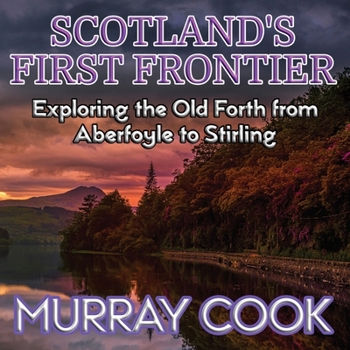
Scotland's First Frontier: Exploring the Old Forth from Aberfoyle to Stirling

Rising from the dark, peat-stained waters of the Trossachs near Aberfoyle, the upper River Forth winds eastward through one of the most storied and contested landscapes in all of Scotland. For millennia, this stretch of water - barely thirty miles in length - has served as something far greater than a river. It has been a border, a battleground, a threshold between worlds.
When the legions of Rome marched north into Caledonia, it was the Forth that checked their ambitions. The Romans understood instinctively what the land itself proclaimed: that here, where the Highlands gave way to the carse and the river coiled through its ancient floodplain towards Stirling's commanding rock, lay the true edge of empire. The frontier they established was not merely a line on a map - it was a living, shifting, disputed thing, written in earthwork and fort, in watchtower and ditch, in the bones of those who fought and died along its banks.
But Rome's frontier was only the beginning of the story. From the retreating legions through the struggles of the Pictish kingdoms, the coming of Christianity, the Viking age, and the turbulent centuries of Scotland's medieval flowering, the upper Forth remained what it had always been: the pivot upon which the fate of a nation turned.
In Scotland's First Frontier, Dr Murray Cook - Stirling Council's archaeologist, Fellow of the Society of Antiquaries of Scotland, and one of Scotland's most trusted and engaging voices on the deep past - brings this extraordinary landscape vividly to life. Drawing on decades of excavation and research in the Stirling area, he reveals what the soil, the river, and the ruins have preserved across two thousand years of human drama. His eye for telling detail and his gift for compelling narrative transform archaeology from an academic pursuit into living history.
This is the story of a river that refused to be merely a river. It is the story of Scotland itself.
Customer Reviews
ThriftBooks ® and the ThriftBooks ® logo are registered trademarks of Thrift Books Global, LLC
