


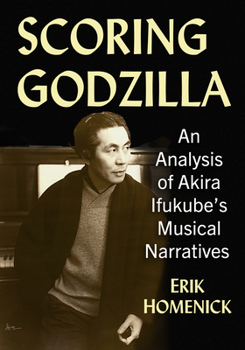
Scoring Godzilla: An Analysis of Akira Ifukube's Musical Narratives

This work explores the life and career of the Japanese composer Akira Ifukube (1914-2006) and his musical scores in daikaijū eiga (giant monster films), such as Godzilla (1954) and King Kong vs. Godzilla (1962). This work argues that, through his auteurist film scoring practices, Ifukube frames daikaijū eiga as audio-cinematic texts that complicate and build upon the more traditional "nuclear horror" interpretations of these films and engages with urgent discourses on Japanese postwar identity and modernity. It is proposed that, through his musical narrations of daikaijū eiga, Ifukube portrays Godzilla and other monsters as paragons of a primordial Japanese and Asian national ethos, thus (re)characterizing the creatures as protective--if chaotic--forces that seek to guard Japan from the loss of its traditional spirituality in the modern age. More broadly, this book demonstrates how film music analysis can serve as the basis for novel methods of cinematic critique.
Customer Reviews
ThriftBooks ® and the ThriftBooks ® logo are registered trademarks of Thrift Books Global, LLC
