


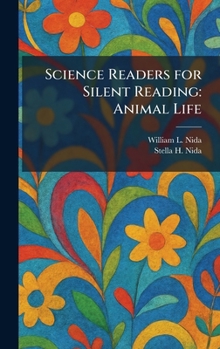
Science Readers for Silent Reading: Animal Life

"Science Readers for Silent Reading Animal Life" is an engaging educational work designed to introduce young readers to the wonders of the natural world. Authored by William L. Nida and Stella H. Nida, this volume focuses on the diverse behaviors, habitats, and characteristics of various creatures, ranging from domestic animals to wild species. By blending scientific facts with accessible storytelling, the book aims to foster both literacy and a curiosity for the biological sciences.
The text is structured specifically to support silent reading, a pedagogy that emphasizes individual comprehension and focused study. Throughout its pages, readers explore the life cycles and survival instincts of animals, gaining a deeper understanding of how they interact with their environments. This classic nature study serves as a testament to early 20th-century science education, offering a charming and informative look at zoology that remains relevant for those interested in the history of pedagogy and natural history. "Science Readers for Silent Reading Animal Life" is an excellent resource for students of nature, educators, and anyone fascinated by the evolution of science literature for children.
This work has been selected by scholars as being culturally important, and is part of the knowledge base of civilization as we know it. This work was reproduced from the original artifact, and remains as true to the original work as possible. Therefore, you may see the original copyright references, library stamps (as most of these works have been housed in our most important libraries around the world), and other notations in the work.
This work is in the public domain in the United States of America, and possibly other nations. Within the United States, you may freely copy and distribute this work, as no entity (individual or corporate) has a copyright on the body of the work.
As a reproduction of a historical artifact, this work may contain missing or blurred pages, poor pictures, errant marks, etc. Scholars believe, and we concur, that this work is important enough to be preserved, reproduced, and made generally available to the public. We appreciate your support of the preservation process, and thank you for being an important part of keeping this knowledge alive and relevant.
Customer Reviews
ThriftBooks ® and the ThriftBooks ® logo are registered trademarks of Thrift Books Global, LLC
