


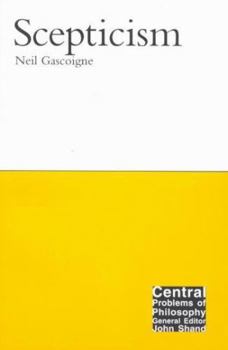

Ever since Descartes identified the first task of philosophy as the defeat of scepticism, the challenge posed by scepticism has remained a central problem for epistemology. Neil Gascoigne introduces the sceptical arguments and methods of the canonical philosophers from Sextus Empiricus's Pyrrhonism to Hume before examining the so-called "therapeutic" approaches to scepticism and arguments for scepticism's apparent intractability.
Gascoigne explores the challenge to epistemology itself and considers two contemporary responses: the turn against foundationalist epistemology in favour of more naturalistic conceptions of inquiry, and the resistance to this response by non-naturalistically inclined philosophers. This contextualization of the sceptical debate gives students a better appreciation of the methodological importance of sceptical reasoning, an analytic understanding of the structure of sceptical arguments (including an assessment of whether the theoretical burden lies with the sceptic or anti-sceptic), and an awareness of the significance of scepticism for other areas of philosophical inquiry.Format:Paperback
Language:English
ISBN:0773524770
ISBN13:9780773524774
Release Date:November 2002
Publisher:McGill-Queen's University Press
Length:192 Pages
Weight:0.55 lbs.
Dimensions:0.7" x 5.3" x 7.9"
Related Subjects
PhilosophyCustomer Reviews
0 rating
Copyright © 2026 Thriftbooks.com
Terms of Use | Privacy Policy | Do Not Sell/Share My Personal Information | Cookie Policy | Cookie Preferences | Accessibility Statement
ThriftBooks ® and the ThriftBooks ® logo are registered trademarks of Thrift Books Global, LLC
ThriftBooks ® and the ThriftBooks ® logo are registered trademarks of Thrift Books Global, LLC
