


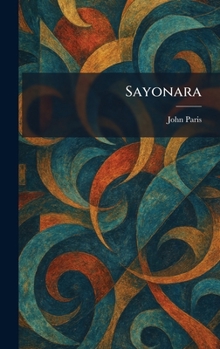
Sayonara

"Sayonara" is a compelling work of early 20th-century fiction that explores the intricate cultural tensions between the West and Japan. The novel follows the journey of Richard Ashley, an idealistic young English clergyman who arrives in Japan with the intent of performing missionary work. However, his preconceived notions are quickly challenged by the reality of a society undergoing rapid modernization while clinging to deep-seated traditions.
Through Ashley's eyes, the reader is introduced to the vibrant yet often misunderstood world of pre-war Japan, touching upon themes of spiritual doubt, the complexities of romantic entanglement, and the stark contrasts between Victorian morality and Japanese social customs. The narrative provides a detailed and often critical examination of both the expatriate community and the local population, capturing the atmosphere of the Taisho era with striking realism.
"Sayonara" serves as a poignant exploration of the difficulties of cross-cultural understanding and the personal transformations that occur when one is far from home. This literary drama remains a significant example of early 20th-century cross-cultural narrative, offering readers a unique window into the historical and social dynamics of a world in transition.
This work has been selected by scholars as being culturally important, and is part of the knowledge base of civilization as we know it. This work was reproduced from the original artifact, and remains as true to the original work as possible. Therefore, you may see the original copyright references, library stamps (as most of these works have been housed in our most important libraries around the world), and other notations in the work.
This work is in the public domain in the United States of America, and possibly other nations. Within the United States, you may freely copy and distribute this work, as no entity (individual or corporate) has a copyright on the body of the work.
As a reproduction of a historical artifact, this work may contain missing or blurred pages, poor pictures, errant marks, etc. Scholars believe, and we concur, that this work is important enough to be preserved, reproduced, and made generally available to the public. We appreciate your support of the preservation process, and thank you for being an important part of keeping this knowledge alive and relevant.
Customer Reviews
ThriftBooks ® and the ThriftBooks ® logo are registered trademarks of Thrift Books Global, LLC
