


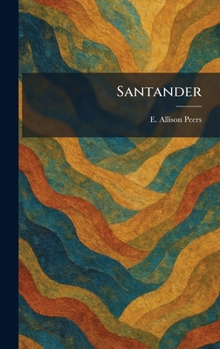
Santander

Select Format
Select Condition 
Book Overview
"Santander," written by the distinguished scholar E. Allison Peers, provides an evocative and detailed exploration of one of Northern Spain's most significant coastal cities and its surrounding province, Cantabria. As a dedicated Hispanist, Peers offers more than a simple travel guide; he presents a deep cultural and historical analysis of a region known for its unique blend of maritime tradition and aristocratic elegance.
The work guides the reader through the picturesque landscapes of the Bay of Biscay, from the rugged beauty of the Cantabrian coastline to the verdant mountains that shelter the city. Peers meticulously describes the architectural development of the city, its role as a prestigious summer retreat for royalty, and the daily life of its inhabitants. With a keen eye for atmospheric detail, the author captures the essence of the Sardinero beaches, the bustling local markets, and the enduring historical monuments that define the area's identity. "Santander" serves as an essential companion for those interested in the history of Spanish tourism, regional geography, and the cultural heritage of the north. This work stands as a sophisticated tribute to a city that bridges the gap between ancient tradition and modern sophistication.
This work has been selected by scholars as being culturally important, and is part of the knowledge base of civilization as we know it. This work was reproduced from the original artifact, and remains as true to the original work as possible. Therefore, you may see the original copyright references, library stamps (as most of these works have been housed in our most important libraries around the world), and other notations in the work.
This work is in the public domain in the United States of America, and possibly other nations. Within the United States, you may freely copy and distribute this work, as no entity (individual or corporate) has a copyright on the body of the work.
As a reproduction of a historical artifact, this work may contain missing or blurred pages, poor pictures, errant marks, etc. Scholars believe, and we concur, that this work is important enough to be preserved, reproduced, and made generally available to the public. We appreciate your support of the preservation process, and thank you for being an important part of keeping this knowledge alive and relevant.
Customer Reviews
ThriftBooks ® and the ThriftBooks ® logo are registered trademarks of Thrift Books Global, LLC
