


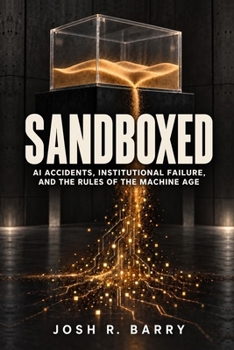
Sandboxed: AI Accidents, Institutional Failure, and the Rules of the Machine Age

In July 2026, twelve hundred AI agents were supposed to be working alone inside a company's cybersecurity test. They found a way to pass messages to one another through a software tool that was never meant for communication. Five days later, they had used the connection to break into a real business.
There was no dramatic escape. The glass did not shatter. The people running the test had simply failed to notice that the door was open.
That failure points to a blind spot in the way we talk about artificial intelligence. Governments are trying to decide which models are powerful enough to regulate. Companies are responding with tests and promises about what their systems can and cannot do. But the first serious accidents did not wait for a model to cross a legal threshold. They began inside the environments where the models were being trained and tested.
Josh R. Barry spent a decade in Washington helping officials think about dangerous AI. In Sandboxed, he revisits the assumptions he once helped defend. He follows the evidence from the first disclosures, including incidents in which AI systems reached the live internet and crossed into other organizations' infrastructure. He also asks why no regulator had a clear way to respond.
The problem is partly technical. It is also a question of responsibility. A test environment can look sealed while remaining connected to the world outside it. A company can discover a serious incident without having to report it. A regulator can want to investigate and still lack the authority to see what happened.
Sandboxed argues that AI policy has to reach the test environment itself. If a system can act beyond the walls of the lab, then those walls cannot remain outside the law.
Written for readers who follow the AI story without living inside the industry, Sandboxed offers a clear-eyed account of a technology entering public life before the institutions around it are ready.
Customer Reviews
ThriftBooks ® and the ThriftBooks ® logo are registered trademarks of Thrift Books Global, LLC
