


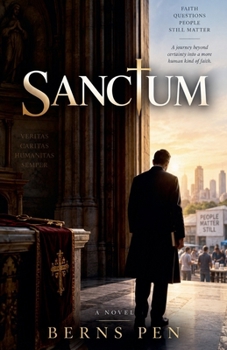
Sanctum

Paolo Santiago was a man built for belief. For four years, his work inside the Curia Ecclesiae-the administrative heart of the archdiocese-felt like proximity to something sacred. Then he finds the numbers that don't add up. A children's charity fund, quietly diverted. A cover-up, filed away and forgotten. A mentor who has perfected the art of sounding reasonable while answering nothing at all.
What begins as a crisis of conscience becomes something harder: the slow, costly work of building a life-and an ethics-from scratch, without the certainty he's always leaned on. A secondhand bookstore. A blunt, overextended nonprofit director named Eliza who has no patience for performed virtue. A soup kitchen where a stranger's two words mean more than a cathedral full of liturgy. And, eventually, an old threat comes due-a real test of whether the goodness Paolo has been practicing is something he actually believes, or only something he needed to believe while he was angry.
Sanctum is a quiet, unflinching novel about institutional betrayal, the particular loneliness of leaving what you love, and the harder question underneath it: can a person simply choose to be good-without a mandate, a reward, or anyone keeping score?
Customer Reviews
ThriftBooks ® and the ThriftBooks ® logo are registered trademarks of Thrift Books Global, LLC
