


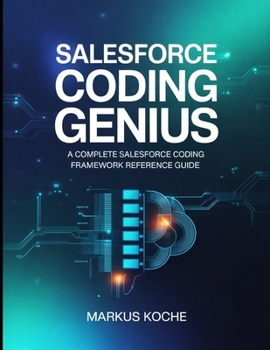
Salesforce Coding Genius: A Complete Salesforce Coding Framework Reference Guide
No Customer Reviews

Salesforce Coding Genius: A Complete Salesforce Coding Framework Reference Guide Elevate your Salesforce development skills with this comprehensive reference guide designed for intermediate to advanced developers. Whether you're building robust enterprise applications, optimizing complex business logic, or implementing scalable solutions on the Lightning Platform, this book provides proven frameworks, best practices, and design patterns to help you write clean, efficient, and maintainable code. Far beyond basic tutorials, Salesforce Coding Genius dives deep into real-world coding challenges, offering ready-to-use frameworks for triggers, batch processing, wizards, and Lightning components. Ideal for Salesforce architects, developers preparing for certifications, or teams standardizing their org's codebase. Unlock the full potential of Apex and Lightning to deliver high-performance, enterprise-grade solutions faster and with fewer headaches. Master Salesforce coding like a genius-build smarter, not harder. ### Table of Contents 1. Introduction to Salesforce Coding Best Practices
- Overview of the Salesforce Platform and Development Lifecycle
- Why Frameworks Matter: Scalability, Maintainability, and Governor Limits
- Transitioning from Declarative to Programmatic Solutions 2. Apex Fundamentals and Coding Standards
- Apex Language Basics and Object-Oriented Principles
- Naming Conventions, Code Formatting, and Readability
- Bulkification, Query Optimization, and Avoiding Common Pitfalls 3. Trigger Frameworks
- Problems with Direct Trigger Logic
- Designing a Robust Trigger Handler Framework
- Implementation Examples and Best Practices for Real-Time Operations 4. Batch Apex and Asynchronous Processing Frameworks
- Understanding Batchable, Queueable, and Schedulable Interfaces
- Building a Reusable Batch Framework for Complex Jobs
- Error Handling, State Management, and Monitoring 5. Service Layer and Domain Model Patterns
- Separation of Concerns: Service, Domain, and Selector Layers
- Implementing fflib or Custom Enterprise Patterns
- Benefits for Testability and Code Reusability 6. Lightning Component Frameworks
- Aura vs. Lightning Web Components (LWC): When to Use Each
- Building Reusable Component Architectures
- Wizard Frameworks for Multi-Step Processes 7. Data Management and Query Best Practices
- Advanced SOQL/SOSL Techniques
- Selector Patterns for Efficient Data Access
- Handling Large Data Volumes and Relationships 8. Testing Frameworks and Strategies
- Achieving High Code Coverage with Meaningful Tests
- Mocking, Dependency Injection, and Unit vs. Integration Testing
- Tools and Tips for Automated Testing 9. Integration and Advanced Patterns
- External Integrations with Callouts and Platform Events
- Design Patterns: Singleton, Factory, Strategy, and Decorator in Apex
- Security Best Practices: Sharing, CRUD/FLS Enforcement 10. Deployment, Performance, and Optimization
- Packaging and Managed Applications
- Profiling, Debugging, and Performance Tuning
- Migrating Legacy Code to Modern Frameworks 11. Case Studies and Real-World Applications
- Applying Frameworks to Common Business Scenarios
- Lessons from Enterprise Implementations This reference guide is your go-to resource for mastering structured, professional-grade Salesforce development.
- Overview of the Salesforce Platform and Development Lifecycle
- Why Frameworks Matter: Scalability, Maintainability, and Governor Limits
- Transitioning from Declarative to Programmatic Solutions 2. Apex Fundamentals and Coding Standards
- Apex Language Basics and Object-Oriented Principles
- Naming Conventions, Code Formatting, and Readability
- Bulkification, Query Optimization, and Avoiding Common Pitfalls 3. Trigger Frameworks
- Problems with Direct Trigger Logic
- Designing a Robust Trigger Handler Framework
- Implementation Examples and Best Practices for Real-Time Operations 4. Batch Apex and Asynchronous Processing Frameworks
- Understanding Batchable, Queueable, and Schedulable Interfaces
- Building a Reusable Batch Framework for Complex Jobs
- Error Handling, State Management, and Monitoring 5. Service Layer and Domain Model Patterns
- Separation of Concerns: Service, Domain, and Selector Layers
- Implementing fflib or Custom Enterprise Patterns
- Benefits for Testability and Code Reusability 6. Lightning Component Frameworks
- Aura vs. Lightning Web Components (LWC): When to Use Each
- Building Reusable Component Architectures
- Wizard Frameworks for Multi-Step Processes 7. Data Management and Query Best Practices
- Advanced SOQL/SOSL Techniques
- Selector Patterns for Efficient Data Access
- Handling Large Data Volumes and Relationships 8. Testing Frameworks and Strategies
- Achieving High Code Coverage with Meaningful Tests
- Mocking, Dependency Injection, and Unit vs. Integration Testing
- Tools and Tips for Automated Testing 9. Integration and Advanced Patterns
- External Integrations with Callouts and Platform Events
- Design Patterns: Singleton, Factory, Strategy, and Decorator in Apex
- Security Best Practices: Sharing, CRUD/FLS Enforcement 10. Deployment, Performance, and Optimization
- Packaging and Managed Applications
- Profiling, Debugging, and Performance Tuning
- Migrating Legacy Code to Modern Frameworks 11. Case Studies and Real-World Applications
- Applying Frameworks to Common Business Scenarios
- Lessons from Enterprise Implementations This reference guide is your go-to resource for mastering structured, professional-grade Salesforce development.
Format:Paperback
Language:English
ISBN:1693942887
ISBN13:9781693942884
Release Date:June 2019
Publisher:Independently Published
Length:82 Pages
Weight:0.47 lbs.
Dimensions:0.2" x 8.5" x 11.0"
Customer Reviews
0 rating
Copyright © 2026 Thriftbooks.com Terms of Use
| Privacy Policy | Do Not
Sell/Share My Personal Information | Cookie Policy | Cookie Preferences | Accessibility Statement
ThriftBooks® and the ThriftBooks® logo are registered trademarks of Thrift Books Global, LLC
ThriftBooks® and the ThriftBooks® logo are registered trademarks of Thrift Books Global, LLC
