


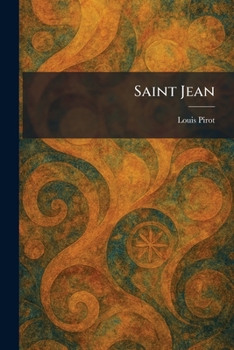
Saint Jean

"Saint Jean" is a profound and scholarly investigation into the life, legacy, and literary contributions of the Apostle John. Authored by the esteemed theologian Louis Pirot, this work offers a detailed examination of the Fourth Gospel and the unique theological voice that distinguishes the Johannine tradition within the New Testament canon.
Pirot skillfully navigates the historical and spiritual landscape of the first century, providing readers with a comprehensive look at the "Beloved Disciple." The text explores the intricate symbolism and mystical depth found in John's writings, offering insights into his specific Christology and his pivotal role in the development of early Christian thought. By analyzing the relationship between John and the foundational events of the Gospel narrative, this study illuminates the enduring impact of his mission and message.
This volume serves as an essential resource for scholars of biblical exegesis, students of theology, and readers seeking a deeper understanding of the scriptures. "Saint Jean" stands as a testament to rigorous biblical scholarship, emphasizing the historical and literary value of one of Christianity's most significant figures and the timeless relevance of his spiritual testimony.
This work has been selected by scholars as being culturally important, and is part of the knowledge base of civilization as we know it. This work was reproduced from the original artifact, and remains as true to the original work as possible. Therefore, you may see the original copyright references, library stamps (as most of these works have been housed in our most important libraries around the world), and other notations in the work.
This work is in the public domain in the United States of America, and possibly other nations. Within the United States, you may freely copy and distribute this work, as no entity (individual or corporate) has a copyright on the body of the work.
As a reproduction of a historical artifact, this work may contain missing or blurred pages, poor pictures, errant marks, etc. Scholars believe, and we concur, that this work is important enough to be preserved, reproduced, and made generally available to the public. We appreciate your support of the preservation process, and thank you for being an important part of keeping this knowledge alive and relevant.
Customer Reviews
ThriftBooks ® and the ThriftBooks ® logo are registered trademarks of Thrift Books Global, LLC
