


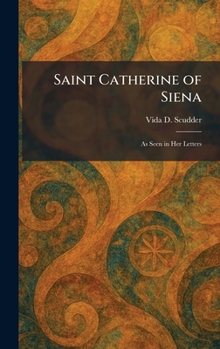
Saint Catherine of Siena: As Seen in Her Letters

"Saint Catherine of Siena as Seen in Her Letters" provides a profound exploration of the life, thought, and spiritual legacy of one of the most remarkable figures of the Middle Ages. Through a curated selection of her personal correspondence, translated and contextualized by Vida D. Scudder, this work reveals the dual nature of Catherine as both a contemplative mystic and a daring political diplomat. The letters offer an intimate glimpse into her unwavering devotion, her intellectual vigor, and her significant influence on the religious and secular leaders of the fourteenth century.
The collection spans a wide range of recipients, from common citizens and family members to popes and monarchs, illustrating Catherine's unique ability to address the spiritual needs of the individual while simultaneously tackling the great ecclesiastical and political crises of her era, such as the Avignon Papacy. Scudder's commentary helps bridge the gap between the medieval world and the modern reader, highlighting the historical importance and enduring spiritual relevance of Catherine's words. This volume serves as an essential resource for those interested in medieval history, mysticism, and the powerful impact of a single woman's voice on the course of Church history.
This work has been selected by scholars as being culturally important, and is part of the knowledge base of civilization as we know it. This work was reproduced from the original artifact, and remains as true to the original work as possible. Therefore, you may see the original copyright references, library stamps (as most of these works have been housed in our most important libraries around the world), and other notations in the work.
This work is in the public domain in the United States of America, and possibly other nations. Within the United States, you may freely copy and distribute this work, as no entity (individual or corporate) has a copyright on the body of the work.
As a reproduction of a historical artifact, this work may contain missing or blurred pages, poor pictures, errant marks, etc. Scholars believe, and we concur, that this work is important enough to be preserved, reproduced, and made generally available to the public. We appreciate your support of the preservation process, and thank you for being an important part of keeping this knowledge alive and relevant.
Customer Reviews
ThriftBooks ® and the ThriftBooks ® logo are registered trademarks of Thrift Books Global, LLC
