


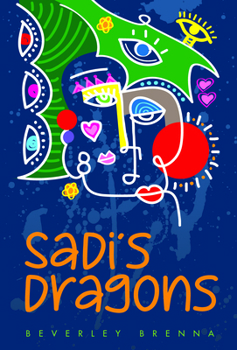
Sadi's Dragons

A middle-grade novel about Sadi, an unhoused eleven-year-old girl, and Marguerite, an old woman losing her memory, and the sparks that fly when their lives collide.
The story opens on eleven-year-old Sadi, hungry and anxious as she waits for her mother, Fleur, to return to their tent on the riverbank. Not far away, an old woman, Marguerite, an artist struggling with memory loss, throws the subject of an attempted still life, a fruit bowl, into her yard, which Sadi finds and steals. Marguerite, frustrated at her attempts to paint, keeps throwing things into her yard and Sadi keeps taking them, until Sadi returns one of the items -- a big canvas -- but not before painting a dragon on it.
Sadi is recovering from an acquired brain injury and struggling with memories of the boating accident in which her brother and father died. Marguerite can't remember her dog's name . . . or how to make paintings as she used to. Then Marguerite passes off Sadi's painting as her own. This lie -- along with her dementia -- becomes the dragon she must tame through the course of the story, while Sadi is haunted by the accident she is trying to forget, and the by fact that her mother and a potential insurance settlement rely on what she has forgotten.
Each character has a truth and a lie, and as the story unfolds, we see how these play out. Each lie wards off a dragon -- the thing each character fears most of all.
Sadi's Dragons features a portrait of an older woman in a context for younger readers, in which the girl and the elderly woman are shown working together to resolve each other's problems. The book spotlights the unhoused experience, brain injuries, dementia, intergenerational bonds and the forging of an unconventional family structure.
Customer Reviews
ThriftBooks® and the ThriftBooks® logo are registered trademarks of Thrift Books Global, LLC
