


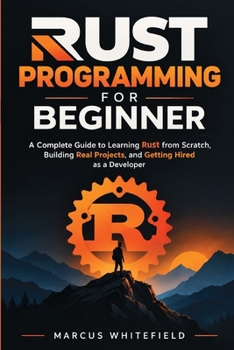
Rust Programing for Beginners: A Complete Guide to Learning Rust from Scratch, Building Real Projects, and Getting Hired as a Developer

Learning Rust can feel intimidating at first. The syntax is different, the compiler is strict, and concepts like ownership, borrowing, and memory safety can take time to understand.
Rust Programming for Beginners gives you a practical path from your first Rust program to building real software and developing skills you can use as a professional developer.
Instead of overwhelming you with advanced theory, this book focuses on understanding the fundamentals, writing useful code, and applying what you learn through practical projects.
Inside this book, you'll learn how to:
- Set up Rust and start writing your first programs
- Understand the core syntax, data types, variables, functions, and control flow
- Work with Rust's ownership and borrowing model
- Understand memory safety without relying on a garbage collector
- Organize projects and manage dependencies with Cargo
- Write cleaner, safer, and more reliable Rust code
- Handle errors and debug common problems
- Work with important Rust features and programming patterns
- Build practical projects that reinforce what you learn
- Develop a portfolio of projects that demonstrates your skills
- Move from learning Rust toward using it in real development work
Learn by building, not just reading.
Each stage is designed to help you understand why Rust works the way it does and then put that knowledge into practice. By working through real projects, you can turn individual concepts into practical programming experience.
Whether you're completely new to Rust, coming from another programming language, or looking for a structured way to build job-ready Rust skills, this book gives you a clear starting point and a practical path forward.
Start with the fundamentals. Build real projects. Develop the skills to take your next step as a Rust developer.
Customer Reviews
ThriftBooks ® and the ThriftBooks ® logo are registered trademarks of Thrift Books Global, LLC
