


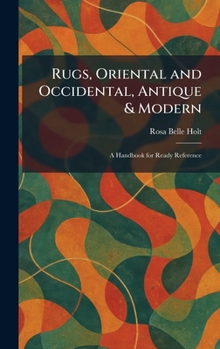
Rugs, Oriental and Occidental, Antique & Modern: A Handbook for Ready Reference

"Rugs, Oriental and Occidental, Antique & Modern" is a comprehensive and authoritative guide to the world of handmade carpets and floor coverings. Written as a handbook for ready reference, this work serves as an essential resource for collectors, decorators, and students of textile history. The text meticulously explores the rich heritage and intricate craftsmanship of rugs from both Eastern and Western traditions.
From the nomadic looms of Central Asia to the established workshops of Europe and America, the book delves into the symbolism, regional patterns, and weaving techniques that define different styles. Detailed attention is given to the materials used, including wool and silk, as well as the natural dyes that provide these pieces with their enduring beauty. By examining the evolution of rug-making from ancient times to the modern era, Rosa Belle Holt provides readers with the tools to identify and appreciate the artistry found underfoot. "Rugs, Oriental and Occidental, Antique & Modern" remains a significant contribution to the study of decorative arts, highlighting the cultural and historical importance of these woven treasures.
This work has been selected by scholars as being culturally important, and is part of the knowledge base of civilization as we know it. This work was reproduced from the original artifact, and remains as true to the original work as possible. Therefore, you may see the original copyright references, library stamps (as most of these works have been housed in our most important libraries around the world), and other notations in the work.
This work is in the public domain in the United States of America, and possibly other nations. Within the United States, you may freely copy and distribute this work, as no entity (individual or corporate) has a copyright on the body of the work.
As a reproduction of a historical artifact, this work may contain missing or blurred pages, poor pictures, errant marks, etc. Scholars believe, and we concur, that this work is important enough to be preserved, reproduced, and made generally available to the public. We appreciate your support of the preservation process, and thank you for being an important part of keeping this knowledge alive and relevant.
Customer Reviews
ThriftBooks ® and the ThriftBooks ® logo are registered trademarks of Thrift Books Global, LLC
