


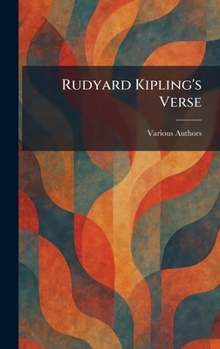
Rudyard Kipling's Verse

"Rudyard Kipling's Verse" is a comprehensive and influential collection of poetry that showcases the rhythmic power and storytelling mastery of one of Britain's most prolific writers. This volume encompasses a wide range of styles and subjects, from the gritty and colloquial voices of soldiers to the grand, philosophical explorations of morality and duty. Known for his technical skill and evocative imagery, Kipling captures the complexities of the late nineteenth and early twentieth centuries, reflecting the spirit of an era marked by colonial expansion and social change.
The work includes some of the most recognizable verses in the English language, exploring themes of honor, resilience, and the vast landscapes of the British Empire. Kipling's poetry is characterized by its accessible yet profound nature, often utilizing a ballad-like structure that lends his words a musical quality. This collection serves as a vital testament to his literary legacy, offering readers a deep dive into the verses that helped define the cultural identity of his time. As a recipient of the Nobel Prize in Literature, Kipling's contributions to the poetic form continue to be studied for their historical significance and enduring impact on world literature.
This work has been selected by scholars as being culturally important, and is part of the knowledge base of civilization as we know it. This work was reproduced from the original artifact, and remains as true to the original work as possible. Therefore, you may see the original copyright references, library stamps (as most of these works have been housed in our most important libraries around the world), and other notations in the work.
This work is in the public domain in the United States of America, and possibly other nations. Within the United States, you may freely copy and distribute this work, as no entity (individual or corporate) has a copyright on the body of the work.
As a reproduction of a historical artifact, this work may contain missing or blurred pages, poor pictures, errant marks, etc. Scholars believe, and we concur, that this work is important enough to be preserved, reproduced, and made generally available to the public. We appreciate your support of the preservation process, and thank you for being an important part of keeping this knowledge alive and relevant.
Customer Reviews
ThriftBooks ® and the ThriftBooks ® logo are registered trademarks of Thrift Books Global, LLC
