


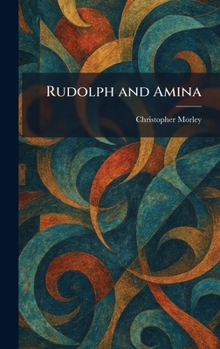
Rudolph and Amina

"Rudolph and Amina" is a whimsical and satirical fantasy that provides a literary reimagining of the legendary tale of "The Black Crook." Set against the enchanting backdrop of the Harz Mountains in eighteenth-century Germany, the story follows the trials and triumphs of Rudolph, a young artist, and his beloved Amina. Their path to happiness is obstructed by supernatural forces and the machinations of the sinister, leading to a narrative rich with magic, adventure, and humor.
Written with Christopher Morley's characteristic wit and elegance, the work serves as a charming report of a bygone era, blending romantic elements with a playful critique of traditional folklore. The narrative captures the spirit of early musical comedy, breathing new life into the characters and settings that famously inspired the American stage. Through its exploration of love, art, and the struggle between good and evil, "Rudolph and Amina" remains a delightful example of Morley's versatility as a storyteller and his ability to infuse historical settings with modern irony and lightheartedness.
This work has been selected by scholars as being culturally important, and is part of the knowledge base of civilization as we know it. This work was reproduced from the original artifact, and remains as true to the original work as possible. Therefore, you may see the original copyright references, library stamps (as most of these works have been housed in our most important libraries around the world), and other notations in the work.
This work is in the public domain in the United States of America, and possibly other nations. Within the United States, you may freely copy and distribute this work, as no entity (individual or corporate) has a copyright on the body of the work.
As a reproduction of a historical artifact, this work may contain missing or blurred pages, poor pictures, errant marks, etc. Scholars believe, and we concur, that this work is important enough to be preserved, reproduced, and made generally available to the public. We appreciate your support of the preservation process, and thank you for being an important part of keeping this knowledge alive and relevant.
Customer Reviews
ThriftBooks ® and the ThriftBooks ® logo are registered trademarks of Thrift Books Global, LLC
