


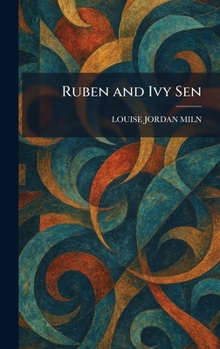
Ruben and Ivy Sen

Select Format
Select Condition 
Book Overview
"Ruben and Ivy Sen" is a compelling exploration of cultural identity and heritage in the early twentieth century. Serving as a poignant sequel to "Mr. and Mrs. Sen", the novel follows the adult lives of Ruben and Ivy, the children born to an interracial marriage between a Chinese diplomat and an English woman. As they navigate a world often divided by racial prejudice and social expectations, the siblings find themselves torn between their two ancestral homes. Ruben feels a profound pull toward his Chinese roots, seeking to honor the legacy of his father, while Ivy struggles to reconcile her appearance and lineage with her life in England.
Louise Jordan Miln provides a sensitive portrayal of the complexities of the Eurasian experience, delving into the emotional and social challenges faced by those living between cultures. Rich in atmospheric detail and psychological depth, the narrative offers a unique perspective on the intersection of East and West. This work remains a significant contribution to early twentieth-century literature for its nuanced treatment of race, belonging, and the enduring power of family ties.
This work has been selected by scholars as being culturally important, and is part of the knowledge base of civilization as we know it. This work was reproduced from the original artifact, and remains as true to the original work as possible. Therefore, you may see the original copyright references, library stamps (as most of these works have been housed in our most important libraries around the world), and other notations in the work.
This work is in the public domain in the United States of America, and possibly other nations. Within the United States, you may freely copy and distribute this work, as no entity (individual or corporate) has a copyright on the body of the work.
As a reproduction of a historical artifact, this work may contain missing or blurred pages, poor pictures, errant marks, etc. Scholars believe, and we concur, that this work is important enough to be preserved, reproduced, and made generally available to the public. We appreciate your support of the preservation process, and thank you for being an important part of keeping this knowledge alive and relevant.
Customer Reviews
ThriftBooks® and the ThriftBooks® logo are registered trademarks of Thrift Books Global, LLC
