


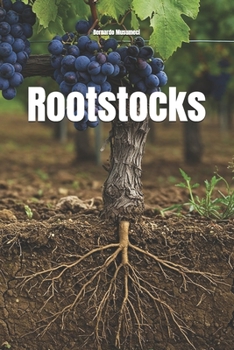
Rootstocks
No Customer Reviews

The importance of rootstock in modern viticulture: a pillar of quality grape production.
Brief history of the use of rootstocks in global viticulture. Fundamentals of Grafting in Viticulture: What is grafting? Definition and objectives.
Phylloxera and the need for resistant rootstocks.
Advantages of using rootstocks: resistance to pests and diseases, adaptation to different soils and climates, vigor control.
Graft incompatibility: causes and consequences.
Grafting techniques: table, field, grafting, bubbling. Classification and Characteristics of Graft Holders: Hybrid rootstocks of Vitis spp.: main species used and their characteristics.
Rootstocks of Wine vine natives: use and adaptations.
Classification of rootstocks: vigor, phylloxera resistance, nematode resistance, drought tolerance, salinity tolerance, adaptation to calcareous soils.
Detailed description of the most used rootstocks in world viticulture: 1103 Paulsen, 110 Richter, SO4, 41B, Fercal, among others. Selection of the Suitable Graft Holder: Factors to consider when choosing the rootstock: type of soil, climate, scion variety, training system, desired vigor, risks of pests and diseases.
Soil analysis: the importance of pH, texture, organic matter and salinity.
Climate: the adaptation of the rootstock to the temperature and rainfall conditions of the region.
Scion variety: compatibility with the rootstock and influence on plant development.
Training system: the choice of rootstock depending on the spacing and height of the plants.
Desired vigor: control of the vegetative growth of the vine. Rootstock management in the vineyard: Soil preparation for planting: acidity correction, fertilization and weed control.
Planting of grafted seedlings: spacing, depth and orientation.
Care in the first year: irrigation, sprout control and protection against frost.
Rootstock training: formation of the trunk and arms of the plant.
Production pruning: the influence of the rootstock on bud load and grape quality.
Soil management: the importance of vegetation cover and green manure. Challenges and Future Perspectives: Adaptation of rootstocks to climate change: selection of genetic materials that are more tolerant to drought and heat.
Resistance to new pests and diseases: the development of rootstocks with greater resistance to nematodes and other pathogens.
Sustainability in rootstock production: the use of more ecological agricultural practices and the reduction of environmental impact.
Research and development of new rootstocks: the search for genetic materials with specific characteristics for different terroirs and grape varieties.
Brief history of the use of rootstocks in global viticulture. Fundamentals of Grafting in Viticulture: What is grafting? Definition and objectives.
Phylloxera and the need for resistant rootstocks.
Advantages of using rootstocks: resistance to pests and diseases, adaptation to different soils and climates, vigor control.
Graft incompatibility: causes and consequences.
Grafting techniques: table, field, grafting, bubbling. Classification and Characteristics of Graft Holders: Hybrid rootstocks of Vitis spp.: main species used and their characteristics.
Rootstocks of Wine vine natives: use and adaptations.
Classification of rootstocks: vigor, phylloxera resistance, nematode resistance, drought tolerance, salinity tolerance, adaptation to calcareous soils.
Detailed description of the most used rootstocks in world viticulture: 1103 Paulsen, 110 Richter, SO4, 41B, Fercal, among others. Selection of the Suitable Graft Holder: Factors to consider when choosing the rootstock: type of soil, climate, scion variety, training system, desired vigor, risks of pests and diseases.
Soil analysis: the importance of pH, texture, organic matter and salinity.
Climate: the adaptation of the rootstock to the temperature and rainfall conditions of the region.
Scion variety: compatibility with the rootstock and influence on plant development.
Training system: the choice of rootstock depending on the spacing and height of the plants.
Desired vigor: control of the vegetative growth of the vine. Rootstock management in the vineyard: Soil preparation for planting: acidity correction, fertilization and weed control.
Planting of grafted seedlings: spacing, depth and orientation.
Care in the first year: irrigation, sprout control and protection against frost.
Rootstock training: formation of the trunk and arms of the plant.
Production pruning: the influence of the rootstock on bud load and grape quality.
Soil management: the importance of vegetation cover and green manure. Challenges and Future Perspectives: Adaptation of rootstocks to climate change: selection of genetic materials that are more tolerant to drought and heat.
Resistance to new pests and diseases: the development of rootstocks with greater resistance to nematodes and other pathogens.
Sustainability in rootstock production: the use of more ecological agricultural practices and the reduction of environmental impact.
Research and development of new rootstocks: the search for genetic materials with specific characteristics for different terroirs and grape varieties.
Format:Paperback
Language:English
ISBN:B0G4QF6GMS
ISBN13:9798276953540
Release Date:December 2025
Publisher:Independently Published
Length:70 Pages
Weight:0.23 lbs.
Dimensions:0.1" x 6.0" x 9.0"
Customer Reviews
0 rating
Copyright © 2026 Thriftbooks.com
Terms of Use | Privacy Policy | Do Not Sell/Share My Personal Information | Cookie Policy | Cookie Preferences | Accessibility Statement
ThriftBooks ® and the ThriftBooks ® logo are registered trademarks of Thrift Books Global, LLC
ThriftBooks ® and the ThriftBooks ® logo are registered trademarks of Thrift Books Global, LLC
