


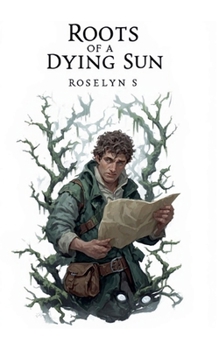
Roots of a Dying Sun

The kingdom of Vaelthorn is forgetting itself. Not catastrophically. Not with fire or war or the drama of an ending. Just quietly, the way a candle dims before it dies. Old songs fading from memory. The names of rivers slipping off tongues. Grandmothers who can no longer picture their grandchildren's faces, smiling serenely like nothing is wrong, because they no longer remember that anything is missing. Nobody is panicking. That is what frightens Soren most. He is twenty-two, underpaid, and spends his days redrawing maps that should not need redrawing. Rivers that moved. Roads that curved somewhere they didn't curve before. A village in the eastern valley that three separate merchants swear used to be a city. His employer calls it natural drift. Soren calls it something else, quietly, to himself, because saying it out loud feels like opening a door he won't be able to close. Then his mother stops waking up. She is not dead. Her chest rises and falls. Her fingers are warm. But her eyes stay shut and her lips move constantly, whispering fragments of a story in a language Soren only half recognises one that predates Vaelthorn, predates the maps, predates everything he has been taught to believe is history. The royal physicians call it exhaustion. Soren calls it a message. So, he goes looking for whoever sent it. What follows is a journey into the unmapped edges of the world, where the land is older and stranger than anything in the official records, where communities have survived by choosing deliberately, carefully - to forget certain things, and where the line between preservation and erasure is thinner than anyone is comfortable admitting. Soren will find allies who carry too much memory and enemies who carry none. He will uncover a secret about Vaelthorn's founding that powerful people have spent generations burying. And he will have to reckon with the hardest question the journey throws at him - not what happened, but whether the truth is worth what it will cost to tell it.
Customer Reviews
ThriftBooks® and the ThriftBooks® logo are registered trademarks of Thrift Books Global, LLC
