



Select Format
Select Condition 
Book Overview
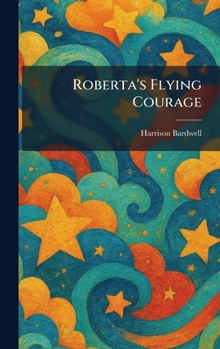
"Roberta's Flying Courage" is an exhilarating tale of adventure and determination set against the backdrop of the early 20th-century aviation boom. The story follows the exploits of a courageous young woman who defies societal expectations to pursue her passion for flight. In an era when the skies were a new frontier, Roberta must navigate not only the physical dangers of piloting aircraft but also the skepticism of those who doubt a woman's place in the cockpit.
Authored by Harrison Bardwell, this work captures the spirit of innovation and the thrill of discovery that characterized the 1930s. The narrative blends high-stakes action with a coming-of-age journey, emphasizing themes of resilience, bravery, and the pursuit of one's dreams despite significant obstacles. Readers are treated to vivid depictions of early flight technology and the breathtaking landscapes seen from above.
As a notable example of early aviation fiction, "Roberta's Flying Courage" offers a fascinating glimpse into the cultural fascination with air travel during the interwar period. It remains a compelling story of a pioneer spirit, highlighting the shifting roles of women and the enduring human desire to conquer the heavens.
This work has been selected by scholars as being culturally important, and is part of the knowledge base of civilization as we know it. This work was reproduced from the original artifact, and remains as true to the original work as possible. Therefore, you may see the original copyright references, library stamps (as most of these works have been housed in our most important libraries around the world), and other notations in the work.
This work is in the public domain in the United States of America, and possibly other nations. Within the United States, you may freely copy and distribute this work, as no entity (individual or corporate) has a copyright on the body of the work.
As a reproduction of a historical artifact, this work may contain missing or blurred pages, poor pictures, errant marks, etc. Scholars believe, and we concur, that this work is important enough to be preserved, reproduced, and made generally available to the public. We appreciate your support of the preservation process, and thank you for being an important part of keeping this knowledge alive and relevant.
Customer Reviews
ThriftBooks ® and the ThriftBooks ® logo are registered trademarks of Thrift Books Global, LLC
