


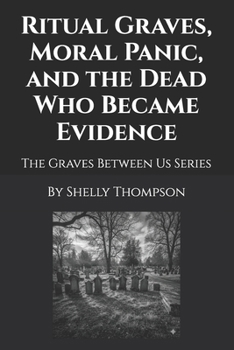
Ritual Graves, Moral Panic, and the Dead Who Became Evidence: The Graves Between Us Series

Graves do not stay silent.
They absorb fear, belief, accusation, and meaning long after the ground has settled. In Ritual Graves, Moral Panic, and the Dead Who Became Evidence, investigative journalist Shelly Thompson of Bazaardaily News examines how burial sites, human remains, and cultural rituals have been transformed into proof during moments of collective hysteria.
Blending narrative nonfiction with historical investigation, this book traces how abandoned graves became crime scenes, how ritual practices were reframed as violence, and how moral panic reshaped evidence in courtrooms, communities, and the media.
From the Satanic Panic of the late twentieth century to cases involving mothers who killed repeatedly and women serial offenders hidden behind institutional trust, these chapters reveal a recurring truth: evidence is never interpreted in a vacuum.
Graves became archives. Soil became testimony. Absence became accusation.
Through fully documented cases, forensic context, and cultural analysis, Thompson explores:
How fear transforms graves into criminal evidenceWhy ritual and cultural burial practices were misidentified as violenceThe gendered blind spots that delayed recognition of female offendersThe role of media and authority in shaping investigative certaintyHow modern forensics both clarifies and complicates truthThis is not a catalog of crimes. It is an examination of how meaning hardens around death, how institutions respond under pressure, and how easily certainty replaces understanding.
This book is for readers interested in:
Investigative journalism and narrative nonfictionTrue crime with cultural and forensic depthMoral panic, ritual accusation, and historical injusticeForensic science, archaeology, and burial practicesThe stories that emerge when the dead become evidenceRitual Graves, Moral Panic, and the Dead Who Became Evidence does not offer closure. It offers orientation-for readers willing to look closely at what lies beneath the stories we tell.
Customer Reviews
ThriftBooks ® and the ThriftBooks ® logo are registered trademarks of Thrift Books Global, LLC
