


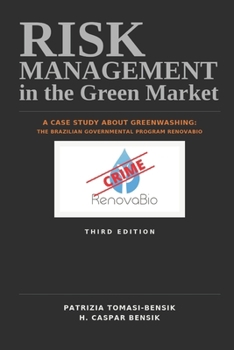
Risk Management in the Green Market: A Case Study About Greenwashing: The Brazilian Governmental Program RENOVABIO

The cracking story about RENOVABIO and the Brazilian sugar and alcohol sector in one of the biggest greenwashing scandals in history - a fable of greed, arrogance, abuse of economic power, and the certainty of impunity in a country that could be the biggest generator of carbon credits in the world, but is held back by two things above all: corruption and ignorance. Told from the multifaceted, privileged perspective of Patrizia Tomasi-Bensik, a technical expert on the UNFCCC's Article 6.4 Roster of Experts who audits the entities that certify carbon credits.
The incipience of the Green Economy favors wrongdoing. But no greenwashing on the planet, this book argues, has gone as far as the Brazilian government program RENOVABIO.
It starts with a law. Evandro Gussi, elected federal congressman for the sugar and alcohol sector in 2014, proposes a bill creating a government program in which the Brazilian biofuel sector produces carbon credits from nothing. The problem: the CBIO decarbonization credits are fake - and this book makes the case that RENOVABIO amounts to embezzlement, market reserve, and ideological falsehood.
Backed by two first-tier banks, Bradesco and Santander, and traded exclusively on B3, Latin America's largest stock exchange, the scheme gains the contours of legitimacy.
In 2017, the bill became law 13.576/17. Gussi, his single term ending just in time, was installed as president of Brazil's largest sugar and alcohol producers' association. The expected return: US$250 billion over ten years.
Risk Management in the Green Market dismantles the eco-sustainability claims made for ethanol, and traces their cost: the poisoning of the environment and of indigenous children, soil impoverishment, Amazon deforestation, and land that could feed people instead going to fuel.
Customer Reviews
ThriftBooks ® and the ThriftBooks ® logo are registered trademarks of Thrift Books Global, LLC
