


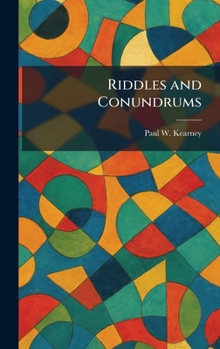
Riddles and Conundrums

"Riddles and Conundrums" is an extensive collection of puzzles, wit, and intellectual challenges designed to stimulate the mind and provide hours of entertainment. Compiled by Paul W. Kearney, this volume serves as a comprehensive guide to the art of the riddle, featuring a wide array of wordplay, logic puzzles, and social games that were a hallmark of early twentieth-century leisure.
The work explores various forms of conundrums, from brief and humorous jests to intricate problems that require deep concentration and creative thinking. Each entry is crafted to test the reader's lateral thinking and linguistic dexterity, making it a perfect resource for fans of classic brain teasers. Beyond its value as a collection of puzzles, the book offers a fascinating glimpse into the cultural history of social entertainment, showcasing the types of intellectual diversions that captivated audiences in the 1920s.
Whether used for solitary amusement or as a centerpiece for social gatherings, "Riddles and Conundrums" remains a timeless treasury of cleverness. It is an essential read for puzzle enthusiasts, educators, and anyone interested in the enduring appeal of linguistic puzzles and the heritage of mental play.
This work has been selected by scholars as being culturally important, and is part of the knowledge base of civilization as we know it. This work was reproduced from the original artifact, and remains as true to the original work as possible. Therefore, you may see the original copyright references, library stamps (as most of these works have been housed in our most important libraries around the world), and other notations in the work.
This work is in the public domain in the United States of America, and possibly other nations. Within the United States, you may freely copy and distribute this work, as no entity (individual or corporate) has a copyright on the body of the work.
As a reproduction of a historical artifact, this work may contain missing or blurred pages, poor pictures, errant marks, etc. Scholars believe, and we concur, that this work is important enough to be preserved, reproduced, and made generally available to the public. We appreciate your support of the preservation process, and thank you for being an important part of keeping this knowledge alive and relevant.
Related Subjects
GamesCustomer Reviews
ThriftBooks® and the ThriftBooks® logo are registered trademarks of Thrift Books Global, LLC
