


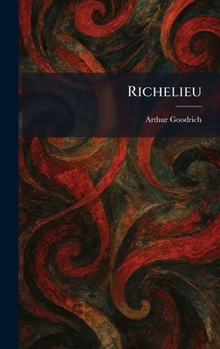
Richelieu

"Richelieu" is a compelling historical drama that breathes life into one of the most powerful and enigmatic figures in French history: Cardinal Armand Jean du Plessis, Duke of Richelieu. Based on the classic work by Edward Bulwer-Lytton and adapted for the modern stage by Arthur Goodrich, this play masterfully captures the high-stakes world of seventeenth-century politics. Set against a backdrop of royal court intrigue, religious tension, and international diplomacy, the narrative follows the Cardinal-Duke as he navigates a labyrinth of conspiracies threatening both his life and the stability of the French crown.
The work explores profound themes of power, patriotism, and the personal sacrifice required for the state. Through sharp dialogue and intense dramatic tension, "Richelieu" portrays the Cardinal not merely as a master strategist, but as a complex man dedicated to his vision of a unified France under Louis XIII. This adaptation showcases the theatrical brilliance of its era, emphasizing the wit and gravitas of its central character. Readers and theater enthusiasts alike will find themselves immersed in a world where a single word or the stroke of a pen can change the course of history. As a significant piece of historical stagecraft, "Richelieu" remains a definitive portrayal of the "Red Eminence" and his enduring impact on European history.
This work has been selected by scholars as being culturally important, and is part of the knowledge base of civilization as we know it. This work was reproduced from the original artifact, and remains as true to the original work as possible. Therefore, you may see the original copyright references, library stamps (as most of these works have been housed in our most important libraries around the world), and other notations in the work.
This work is in the public domain in the United States of America, and possibly other nations. Within the United States, you may freely copy and distribute this work, as no entity (individual or corporate) has a copyright on the body of the work.
As a reproduction of a historical artifact, this work may contain missing or blurred pages, poor pictures, errant marks, etc. Scholars believe, and we concur, that this work is important enough to be preserved, reproduced, and made generally available to the public. We appreciate your support of the preservation process, and thank you for being an important part of keeping this knowledge alive and relevant.
Customer Reviews
ThriftBooks ® and the ThriftBooks ® logo are registered trademarks of Thrift Books Global, LLC
