


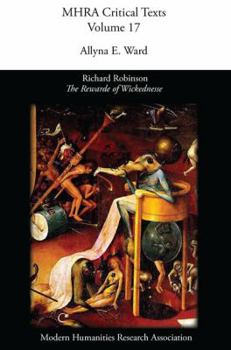
The Rewarde of Wickednesse

This volume provides the first printed critical edition of a text which has recently attracted the attention of scholars working on early modern English literature. The Rewarde of Wickednesse (1574) is a univocal quasi-epic poem that imitates the de casibus form of A Mirror for Magistrates and makes a clear indication of the hellish position of the damned. The poem is a vehemently anti-Catholic polemic that draws a distinct link between sinful behaviour on earth and Hell by locating both the consequences and the origin of sin in Hell.
Robinson wrote the poem during the period when his employer, George Talbot, was appointed as the jailer over Elizabeth's cousin Mary Stuart during the period of her imprisonment at Sheffield Castle and Sheffield Manor.
Robinson stages the laments in the space of Hell, not simply as ghosts reporting back from the underworld. The importance of the text lies in the clues it provides as to how Elizabethans were working with a lingering Catholic heritage in a distinctly Protestant nation. The poem's exploration of matters of sin and damnation in relation to Hell and Pluto acknowledge the relevance of these issues to an Elizabethan audience. Robinson's application of the de casibus form to the examples places them in the Elizabethan mirror tradition by making them proffer warnings about the rewards for sin. The Rewarde of Wickednesse, through its inclusion of different, and sometimes opposing, traditions, faiths and literary formats, reveals an Elizabethan culture rife with the apprehensions concerning salvation and damnation that define early English Protestantism.
Customer Reviews
ThriftBooks® and the ThriftBooks® logo are registered trademarks of Thrift Books Global, LLC
