


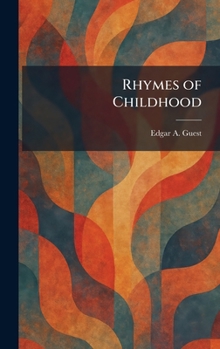
Rhymes of Childhood

Select Format
Select Condition 
Book Overview
"Rhymes of Childhood" is a heartwarming collection of verse by the beloved "People's Poet," Edgar A. Guest. This volume captures the essence of family life, focusing on the simple, everyday moments that define the experience of parenthood and the innocence of youth. Through his accessible and rhythmic style, Guest explores themes of domestic joy, the mischief of young boys and girls, and the profound emotional bonds between parents and their children.
Written with the gentle sentimentality and optimism that made Guest a household name in the early 20th century, these poems resonate with a timeless appreciation for the home and the hearth. From the excitement of a child's first steps to the quiet reflections of a father watching his son sleep, the collection serves as a poignant reminder of the virtues of kindness, patience, and love. "Rhymes of Childhood" stands as a testament to the enduring power of relatable, plain-spoken poetry that speaks directly to the heart of the common experience, making it a classic piece of American literary history for readers of all ages.
This work has been selected by scholars as being culturally important, and is part of the knowledge base of civilization as we know it. This work was reproduced from the original artifact, and remains as true to the original work as possible. Therefore, you may see the original copyright references, library stamps (as most of these works have been housed in our most important libraries around the world), and other notations in the work.
This work is in the public domain in the United States of America, and possibly other nations. Within the United States, you may freely copy and distribute this work, as no entity (individual or corporate) has a copyright on the body of the work.
As a reproduction of a historical artifact, this work may contain missing or blurred pages, poor pictures, errant marks, etc. Scholars believe, and we concur, that this work is important enough to be preserved, reproduced, and made generally available to the public. We appreciate your support of the preservation process, and thank you for being an important part of keeping this knowledge alive and relevant.
Customer Reviews
ThriftBooks® and the ThriftBooks® logo are registered trademarks of Thrift Books Global, LLC
