


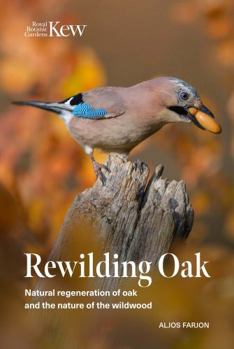
Rewilding Oak

With far-reaching implications for nature management, this book presents a cogent and compelling case for rewilding oak with minimal intervention.
Rewilding Oak presents a radical new perspective on natural oak regeneration, backed by international evidence and a rigorous reassessment of the historic wildwood. This book is the first to assemble comprehensive evidence challenging the broadly accepted "Vera hypothesis," which argues that oaks have been dependent on large grazing animals to maintain a half-open landscape since prehistory. Since it was first formulated in 2000, this hypothesis has shaped rewilding efforts that prioritize grazing to create a mosaic of woodland and grassland. In fact, this environment is more reflective of the historical agricultural landscape than of the natural wildwood. While original landscapes can never be exactly recreated, evidence shows that the wildwood was a forest, not a parkland. Contrary to currently accepted wisdom, extensive field observations demonstrate that light-demanding trees like oaks maintain themselves in forest ecosystems without the need for human or animal intervention. Rewilding Oak investigates the ecology of our two native oaks across lowland northern Europe and their capacity to regenerate in various habitats, from grassland to woodland. Evidence from forest history and prehistory further supports the "closed-canopy" hypothesis of the wildwood.
Related Subjects
NatureCustomer Reviews
ThriftBooks ® and the ThriftBooks ® logo are registered trademarks of Thrift Books Global, LLC
