


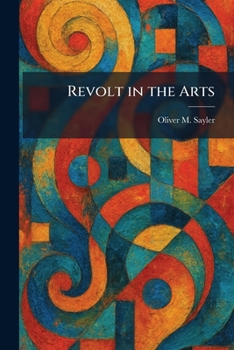
Revolt in the Arts

Select Format
Select Condition 
Book Overview
"Revolt in the Arts" is a comprehensive survey and critical examination of the radical shifts occurring across the American cultural landscape during the early 20th century. Written by noted critic Oliver M. Sayler, this work captures a pivotal moment of transition as traditional forms of expression-including theater, literature, painting, and music-confronted the disruptive forces of the "Machine Age" and the rapid ascent of cinema and radio.
The book analyzes the widespread "revolt" against established Victorian conventions and the collective quest for a new, authentically modern aesthetic. Sayler provides an insightful overview of how creators and audiences were navigating a world transformed by technological innovation and shifting social values. By documenting the voices and trends of the era, the work explores the tension between classicism and the burgeoning avant-garde.
As both a historical document and a piece of astute cultural criticism, "Revolt in the Arts" offers invaluable insights into the Modernist movement and the anxieties and aspirations of the interwar years. It remains an essential resource for scholars and readers interested in the evolution of 20th-century culture and the persistent dialogue between artistic vision and industrial progress.
This work has been selected by scholars as being culturally important, and is part of the knowledge base of civilization as we know it. This work was reproduced from the original artifact, and remains as true to the original work as possible. Therefore, you may see the original copyright references, library stamps (as most of these works have been housed in our most important libraries around the world), and other notations in the work.
This work is in the public domain in the United States of America, and possibly other nations. Within the United States, you may freely copy and distribute this work, as no entity (individual or corporate) has a copyright on the body of the work.
As a reproduction of a historical artifact, this work may contain missing or blurred pages, poor pictures, errant marks, etc. Scholars believe, and we concur, that this work is important enough to be preserved, reproduced, and made generally available to the public. We appreciate your support of the preservation process, and thank you for being an important part of keeping this knowledge alive and relevant.
Customer Reviews
ThriftBooks ® and the ThriftBooks ® logo are registered trademarks of Thrift Books Global, LLC
