


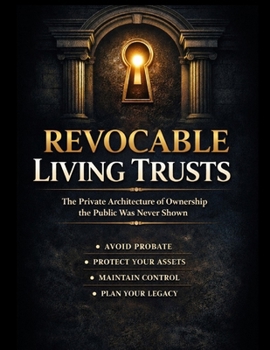
Revocable Living Trusts: The Lawful Shield They Never Taught You About

The Private Architecture of Ownership, the Public Was Never Shown
Most people believe ownership is simple.
If your name is on it, you own it.
Legally, that assumption is incomplete.
Ownership is not defined by effort or possession; it is defined by structure. The way assets are titled determines who controls them, who can access them, and what happens when life changes through incapacity or death.
Revocable Living Trusts explains clearly and step by step how trusts function as a lawful, private framework for managing property, maintaining continuity, and avoiding unnecessary court involvement.
This book is not about loopholes or shortcuts.
It is about understanding the system as it actually works.
Inside This Book, You'll Learn: What a revocable living trust really is and what it is not Why wills alone often lead to probate, delays, and public records How trusts operate during life, incapacity, and after death The exact steps to properly create a revocable living trust How to fund a trust correctly (the step most people miss) The role of trustees and successor trustees How taxes and compliance actually work with trusts When irrevocable trusts may be appropriate for asset protection The difference between control and protection, and why both matterWritten in clear, accessible language, this book breaks down complex legal concepts into practical understanding without relying on fear or hype. Every chapter builds toward one goal: structured ownership that works when it matters most.
Who This Book Is For:Property owners
Parents and families
Business owners
Individuals planning for the future
Anyone who wants privacy, continuity, and clarity
Whether you are just beginning to explore estate planning or want to understand how trusts truly function, this book provides a grounded, educational foundation you can build on.
Ownership doesn't disappear; it transfers.
The question is whether it transfers by design or by default.
Customer Reviews
ThriftBooks ® and the ThriftBooks ® logo are registered trademarks of Thrift Books Global, LLC
