


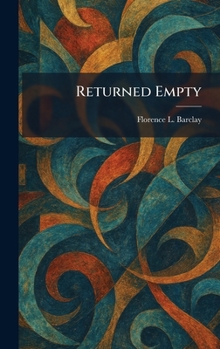
Returned Empty

"Returned Empty" is a poignant and emotionally resonant novella by Florence L. Barclay that explores profound themes of abandonment, identity, and the innate human need for connection. The story follows the life of Luke, a child left at a foundling hospital with nothing but a mysterious tag. As he grows into adulthood, Luke struggles with the stigma of his unknown origins and the haunting feeling of being "returned empty"-a soul without a family, a name, or a past.
Barclay's narrative masterfully navigates the rigid social structures of the early 20th century while delving into the psychological yearning of an individual searching for his place in the world. Through Luke's journey, the author examines the impact of social isolation and the redemptive power of unexpected kindness and belonging. Known for her deeply moralistic and sentimental prose, Barclay delivers a powerful meditation on what defines a person beyond their lineage.
"Returned Empty" stands as a compelling work of literary fiction that challenges the reader to consider the value of every human life, regardless of its beginnings. This work captures the delicate balance of heartache and hope, characteristic of Barclay's celebrated storytelling style.
This work has been selected by scholars as being culturally important, and is part of the knowledge base of civilization as we know it. This work was reproduced from the original artifact, and remains as true to the original work as possible. Therefore, you may see the original copyright references, library stamps (as most of these works have been housed in our most important libraries around the world), and other notations in the work.
This work is in the public domain in the United States of America, and possibly other nations. Within the United States, you may freely copy and distribute this work, as no entity (individual or corporate) has a copyright on the body of the work.
As a reproduction of a historical artifact, this work may contain missing or blurred pages, poor pictures, errant marks, etc. Scholars believe, and we concur, that this work is important enough to be preserved, reproduced, and made generally available to the public. We appreciate your support of the preservation process, and thank you for being an important part of keeping this knowledge alive and relevant.
Customer Reviews
ThriftBooks ® and the ThriftBooks ® logo are registered trademarks of Thrift Books Global, LLC
