


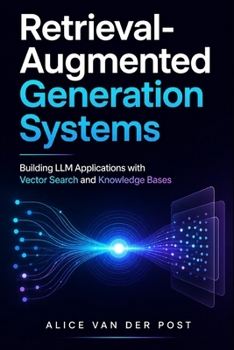
Retrieval-Augmented Generation Systems: Building LLM Applications with Vector Search and Knowledge Bases

Retrieval-augmented generation has become one of the most important patterns for building practical LLM applications. By connecting language models to external information sources, developers can create systems that retrieve relevant context, ground responses in domain knowledge, and support more reliable AI workflows.
Retrieval-Augmented Generation Systems provides a structured introduction to the architecture, design, and implementation of RAG applications. It explains how vector search, embeddings, chunking strategies, retrieval pipelines, knowledge bases, and evaluation methods work together inside modern LLM systems.
Inside, readers will explore:
How retrieval-augmented generation worksThe role of embeddings and vector databasesHow to design document ingestion and chunking pipelinesMethods for improving retrieval qualityPrompting patterns for grounded LLM responsesKnowledge base design for technical and business use casesEvaluation concepts for accuracy, relevance, and reliabilityPractical architecture patterns for production-oriented AI applicationsWritten for developers, technical professionals, AI builders, and teams working with language model systems, this book focuses on clear explanations and practical system design rather than hype.
Whether you are learning RAG for the first time or designing more structured LLM applications, this guide provides a foundation for understanding how retrieval, knowledge, and generation fit together.
Customer Reviews
ThriftBooks ® and the ThriftBooks ® logo are registered trademarks of Thrift Books Global, LLC
