
Skip to content
Scan a barcode
Scan
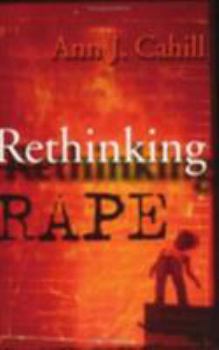
Paperback Rethinking Rape Book

ISBN: 0801487188

ISBN13: 9780801487187

Rethinking Rape

Select Format

Select Condition ThriftBooks Help Icon

Recommended

Format: Paperback

Condition: New

$50.82
50 Available
Ships within 2-3 days

Book Overview

Rape, claims Ann J. Cahill, affects not only those women who are raped, but all women who experience their bodies as rapable and adjust their actions and self-images accordingly. Rethinking Rape counters legal and feminist definitions of rape as mere assault and decisively emphasizes the centrality of the body and sexuality in a crime which plays a crucial role in the continuing oppression of women.Rethinking Rape applies current feminist theory to an urgent political and ethical issue. Cahill takes an original approach by reading the subject of rape through the work of such recent continental feminist thinkers as Luce Irigaray, Elizabeth Grosz, Rosi Braidotti, and Judith Butler, who understand the body as fluid and indeterminate, a site for the negotiation of power and resistance. Cahill interprets rape as an embodied, sexually marked experience, a violation of feminine bodily integrity, and a pervasive threat to the integrity and identity of a woman's person.The wrongness of rape, which has always eluded legal interpretation, cannot be defined as theft, battery, or the logical extension of heterosexual sex. It is not limited to a specific event, but encompasses the myriad ways in which rape threatens the prospect of feminine agency. As an explication that fully countenances women's experiences of their own bodies, Rethinking Rape helps point the way toward reparation, resistance, and the evolution of feminine subjectivity.

Customer Reviews

3 ratings

Too far? More like not too far enough...

Ann Cahill is almost where we need to be (and judging by one review, she's way ahead of some). The only thing missing in her work is explicit recognition of the fact that our species has two distinctly different mating strategies, one primitive and one modern. We first identified these two contradictory sets of behaviors about twenty years ago, during research into gender-related anomalies in human communication. Since then at least two other species of higher primates have been found to possess a similar pair of contradictory mating strategies. The primitive strategy is inherently rapacious; any male who chooses to apply the related behaviors is announcing his intent. Interacting with a female using the primitive strategy always results in some damage, regardless of how far he goes with it. It's doubtful many males will make such a choice once the details of the two strategies become better known. For example, the primitive behaviors have a warped metric of pleasure, yielding experiences that are insignificant by comparison to the normal (modern) behaviors. This is likely a significant factor in the current prevalence of ED. We picked this book up used several years ago (at the Wooden Shoe, a great, real walk-in book store in Philadelphia). Well worth the read...

Insightful, compassionate and strong book

This accessible and very readable book explores the devastating nature of rape with a firm grounding in philosophy. Without losing sight of the viciousness of the act itself, Cahill conducts a phenomenological (a descriptive account of human being in the world) investigation of the specific harms that rape inflicts and what the survivors may do to understand and prevent them. This work needed to be written--there are reasons rape is so catastrophic that goes beyond superficially viewing rape as an immoral but evolutionarily strong behavior (see the disasterous book by Thornhill for this) or viewing rape as psychological trauma, but never seriously examining its damage to one's sense of self, relations with others, the world, and human experience. Besides considering these basic philosophical themes, Cahill also examines previous views of rape and breaks them down conceptually, revealing their biases and inaccuracies--for instance the view that rape is either sex or violence, or that the victim should be blamed. Since nearly all of rape law to my knowledge is based on these distorted viewpoints, exposing their misrepresentations of women and the assailant/perpetrator are vital. (Also, the reasons Cahill gives for rape's devastation undermine the traditional foundations of Western metaphysics--generally, the idea that human reason is infinite and all-knowing, and that humans' bodies only serve to distract from divine knowledge and pure Ideas.) Cahill does all of this with clarity, philosophical rigor and passion. As a philosophy student trying to understand and relate to my best friend who was raped it was awesome. Finally the other amazing and brilliant book I would recommend for a philosophical and personal look at sexual assault is Susan Brison's Aftermath: Violence and the Remaking of a Self.

An original and profound work

When I was seeking ways to articulate my experience of being raped in 2000 I looked through existing feminist works on rape and on the body and was disappointed. Cahill's book was the book I was looking for then, for me she expresses thoughts I had but could not formulate clearly in language. Not that this is in anyway a self-help book, it is a work of philosophy concerned to understand what it is to be human and specifically the meaning behind what is often categorised as 'senseless violence'. For many victims of senseless violence the question of 'why' burns at the mind, and this book addresses that question in a systematic scholarly way. Cahill carefully considers the significance of our bodies to our sense of 'self' and in this consideration she captures precisely the nature of the harm that rape does. She provides an excellent review of existing theories of rape and also of recent theories of the body. Drawing out elements of theories of the body in considering how to think about human beings as subjects she argues that the human subject must be understood as both embodied and as intersubjective. This is in contrast to mainstream political theory of the subject as fundamentally rational mind which has 'property in' its body. An understanding of the body-as-self and of the self as formed in relation to others illuminates the precise nature of the harm done by rape that an understanding of the self as autonomous mind that 'has' a body cannot. Rape is not a crime against one's property in one's self, it is a crime against the self. Only by such a re-thinking of the nature of the subject can we see rape as a direct assult on the 'self' and thus understand why rape is so profoundly disordering of the self. Furthermore, Cahill's analysis of the impact of the threat of rape on female bodily comportment fuses insights from the feminist anti-rape tradition with post-Foucaultian understandings on how power acts on and through the body. Thus this book theoretically grounds many of the insights of feminist activism against rape with extraordinary clarity and is an important achievement.
Copyright © 2025 Thriftbooks.com Terms of Use | Privacy Policy | Do Not Sell/Share My Personal Information | Cookie Policy | Cookie Preferences | Accessibility Statement
ThriftBooks ® and the ThriftBooks ® logo are registered trademarks of Thrift Books Global, LLC

GoDaddy Verified and Secured